

Technique Summary
Based on the social game “Would You Rather,” this technique asks all co-designers to answer a series of questions that drive toward gathering requirements. Co-designers then discuss their answers to further shed light on potential design directions.
When and why to use this technique
Would you Rather is best used when trying to discern values and attitudes around a certain technology or situation, and should be considered a formative design research tool. It is useful for gleaning design insights at the early stage of design, likely before physical design has begun in earnest.
Supplies and Preparation
- Supplies: None.
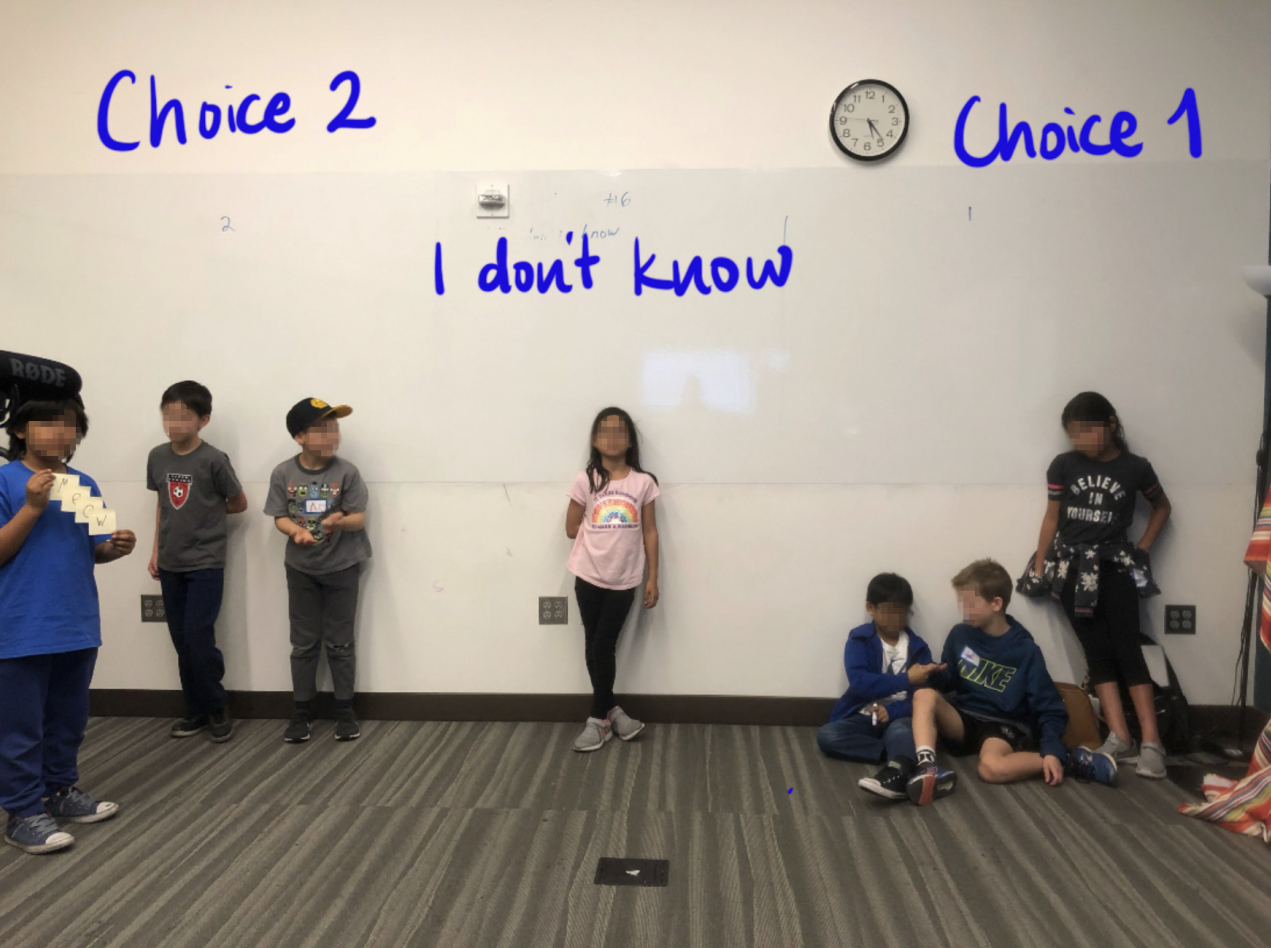
- Preparations: You could use a line of tape on the ground (as in Line Judging) or signs on the wall to indicate the answers to the questions, but these are not strictly necessary.
How to use this technique
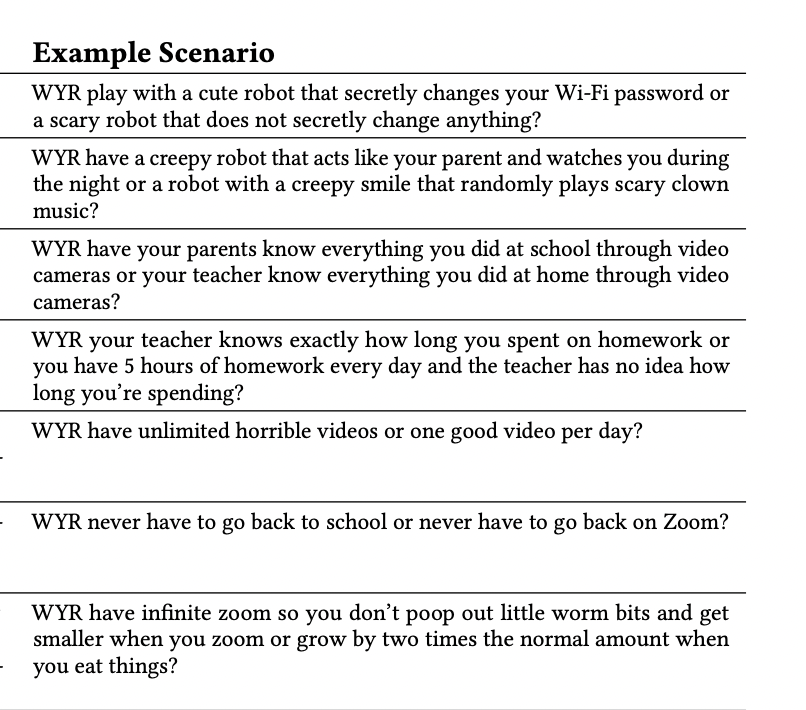
- Would You Rather asks a series of forced-choice answer questions (i.e., “Would you rather play a game you like with lots of ads pop up randomly OR play a game you don’t like but control the number of ads?” [Simko et al., 2021]).
- Once a question is posed, members of the group vote on their choice. Once all members have voted, a discussion follows as to why co-designers voted as they did.
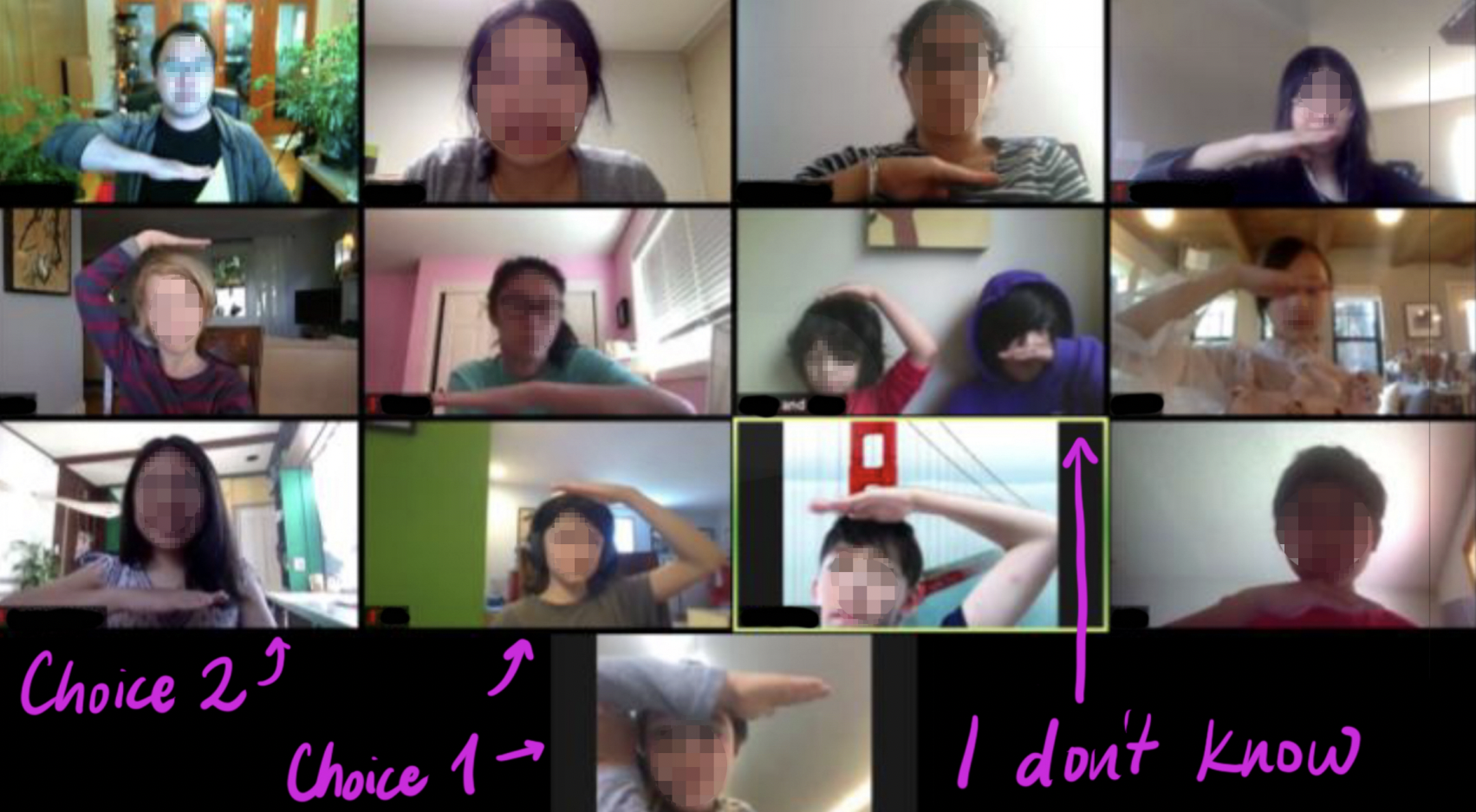
- Designers can indicate their choices in a variety of ways, such as with a thumbs up or thumbs down, moving along a line such as in Line Judging, or a paddle with color-coded sides for choices. If using Would you Rather online, having each designer put a flat hand above their face for choice one and below their face for choice two can provide a quick and easy visual way to assess the votes.
- Questions should force a choice but ideally not have choices that lead to everyone voting for the same answer. The most nuanced insights emerge from discussion.
- Designers should be allowed to change their votes throughout the discussion.
- A quantitative counting of votes can be helpful, but it is likely not the most insightful or fruitful part of this technique. The true insights come from the discussion.
- Multiple related questions (about 7-10) should be asked and discussed throughout the design session. Sometimes, designers can create these questions ahead of the session. Other times, all co-designers, child and adult alike, could be asked to create additional questions on the topic during the session that then get posed to the team.
See this technique in action
References
Simko, L. Chin, B., Na, S., Saluja, H., Zhu, T., Kohno, T., Hinkler, A., Yip, J., Cobb, C. (2021). Would you Rather: A focus group method for eliciting and discussing formative design insights with children. In Proceedings of IDC 2021, 131 – 146.