
One of the most important underlying principles of co-design is that everyone on the team needs to be seen as, and feel, equal within the design process. While it is true that different members of the team have different areas of expertise, it is also true that all of these expertises must be valued equally in order for co-design to function optimally. On a team with adults and children, it is likely that adults have different expertises – for example, computer science, education, or media production. The children on the team are experts in being children today.
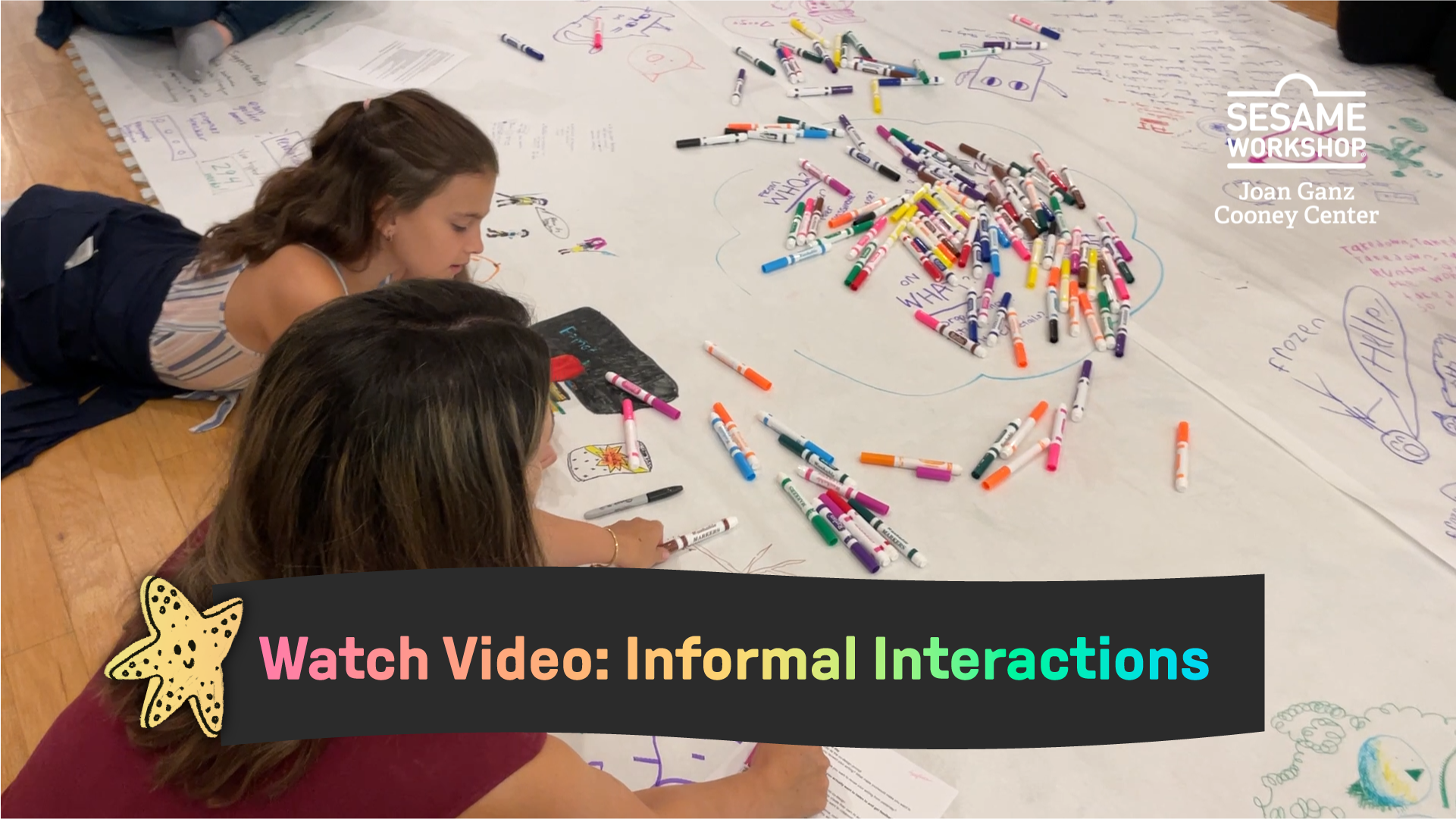
During sessions, it is important for all team members to value one another’s expertise and contributions. Because adults typically have more power than children, it takes intention to make this happen. One way to rebalance the power dynamic is to make sure that there is time for informal interactions between adults and children.
- If it is possible, have some sessions that are dedicated simply to allowing relationships to build before starting design sessions for particular projects. Long-standing co-design teams may do this with a summer camp program. While this program can introduce design techniques and projects, it is also a great way to get to know each other and to set the tone for how adults and children on the co-design team will interact.
- If you cannot dedicate sessions to informal interactions, try dedicating some time to them at the beginning of sessions. Our team has found that allowing everyone to simply play with clay for a while at the beginning of a design session is a good way to encourage informal interactions.
- During each session, snack time is a perfect time for informal interactions. Adults should remember that this is not the time to talk about design issues. Instead, it’s time to build relationships.
- There may sometimes be special events, such as field trips or parties, that happen within the scope of co-design but offer an opportunity to be more informal in interactions. Even taking design sessions outside can sometimes re-establish informal relationships.