

Product
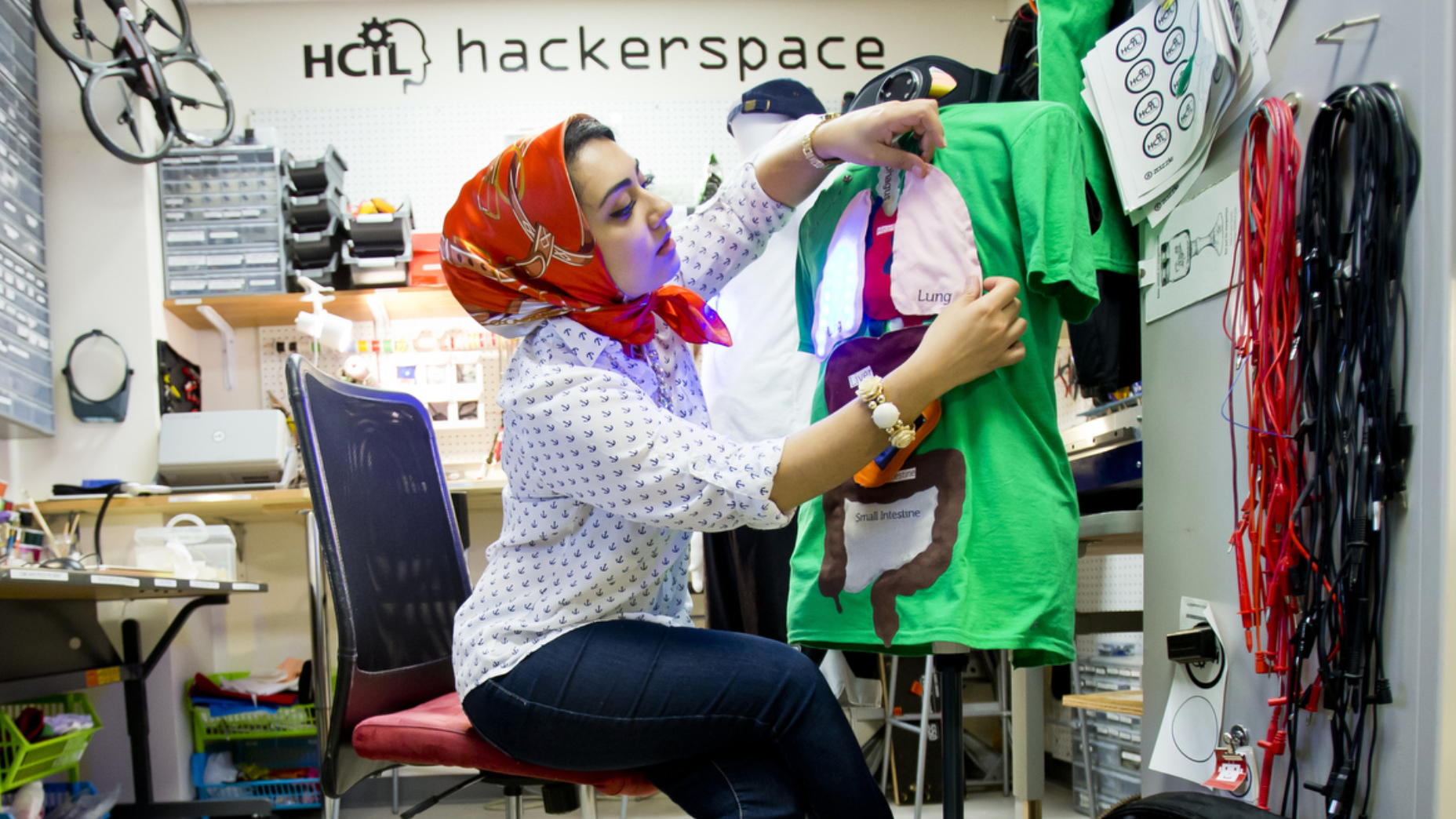
BodyVis, a technologically-enhanced shirt designed to support children to learn about the inner workings of their bodies, including the functions of their organs.
Age and Target Demographic
7 to 11 years old
Team and Partners
University of Maryland KidsTeam, graduate student Leyla Norooz, lead
Product Development Stage
Co-design was used throughout the design process, from conception to iteration to final product. The product of BodyVis went through three main iterations, between which the adult designers made changes based on the co-design ideas.
Background
BodyVis was created at the University of Maryland’s Human-Computer Interaction Lab, with the HackerSpace team. It was largely a graduate student project exploring wearable technology. Researchers asked, What if we could use wearable technology to engage children in body learning? It is notoriously hard for children to visualize and understand the inner workings of their own bodies.
Design Question(s)
How can we use the affordances of wearable technology to create a shirt that supports children in learning about the inner workings of their own bodies?
Process
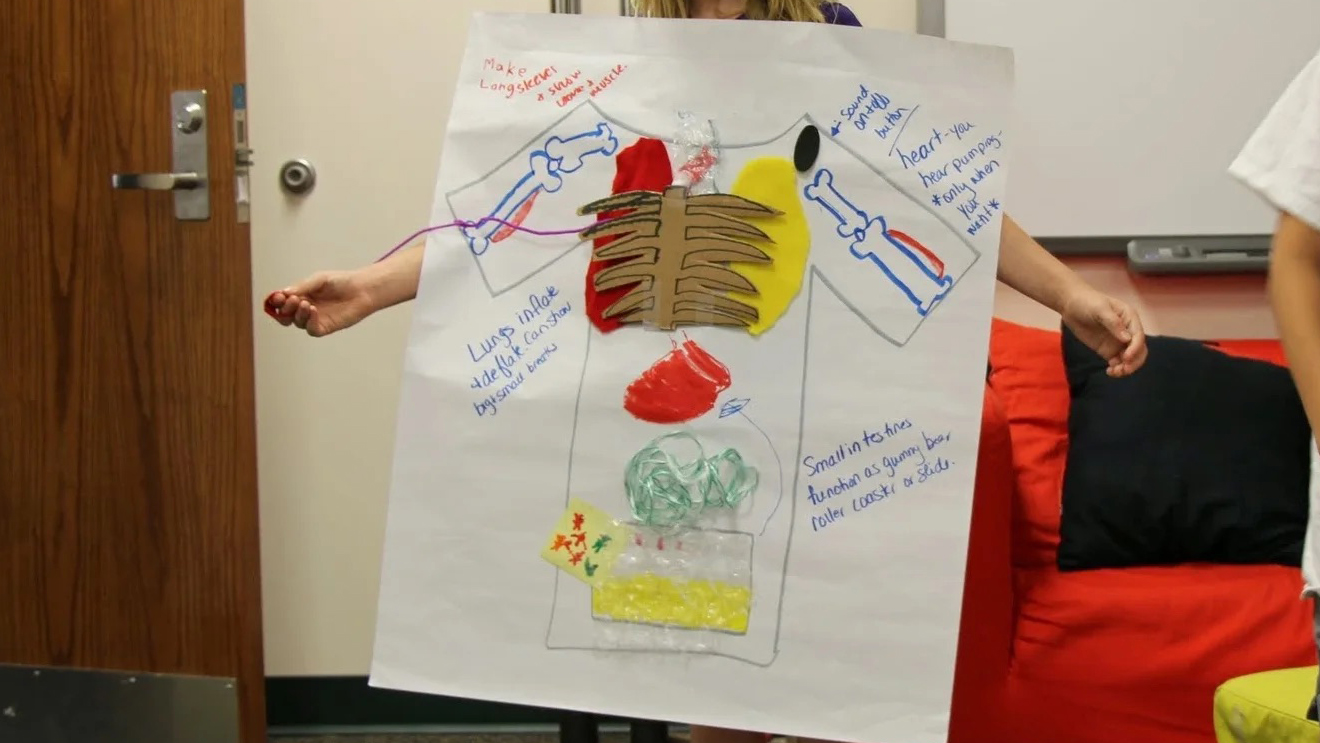
Children were involved as co-designers from the beginning of the design process and throughout the design process, using co-design with children to build design criteria. Specific techniques used included Bags of Stuff (low-tech prototyping) and Paper Prototyping; specifically Big Paper. After synthesizing Big Ideas from each session, adult design partners noted specific design suggestions for additions to the shirt, made those changes, and came back to the team with them for continued feedback and elaboration.
Design ideas that emerged from the co-design sessions with children included having tangible and removable pieces to the shirt, as well as the light and sound feedback included in the final design. This project was undertaken with the University of Maryland KidsTeam.
Final Product
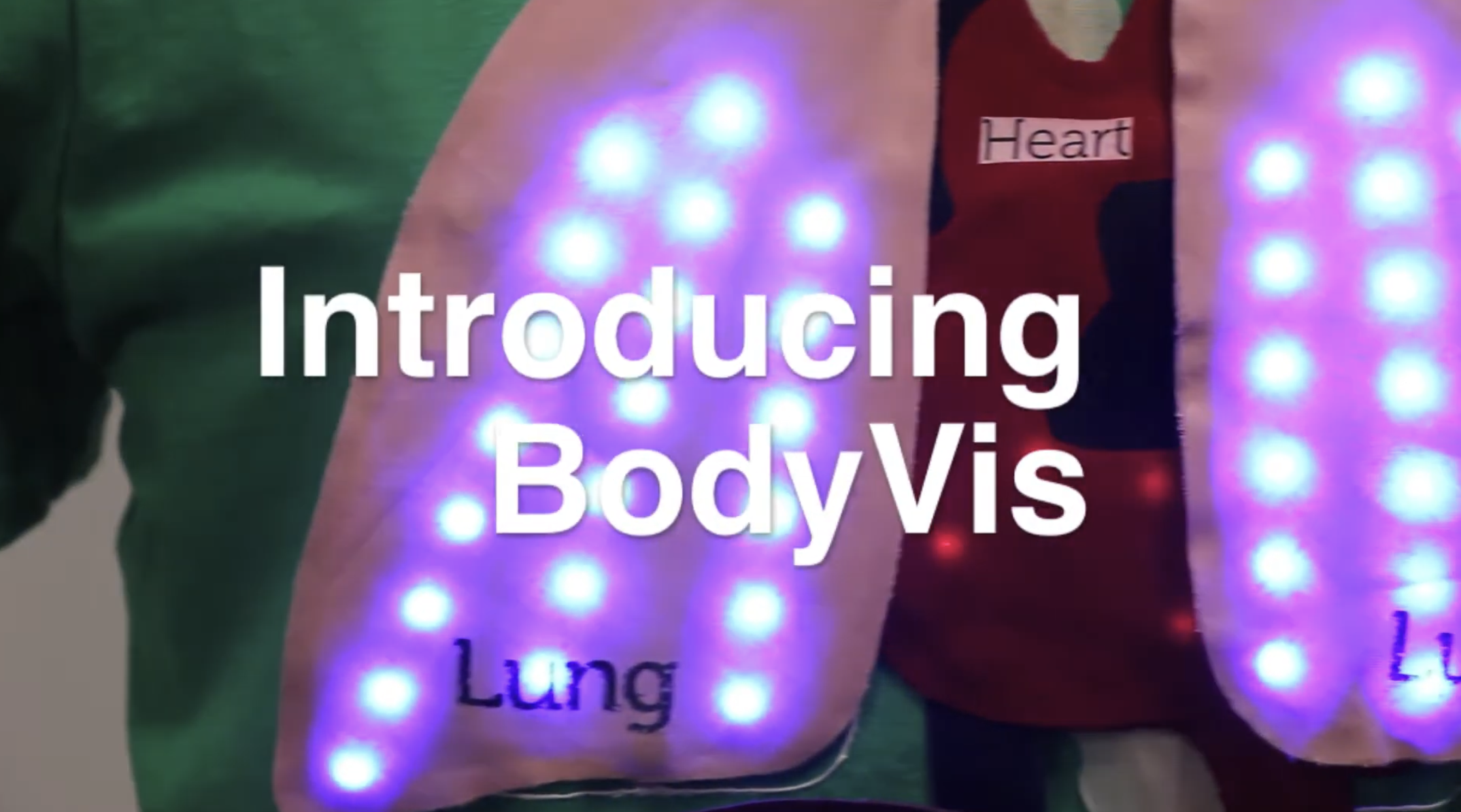
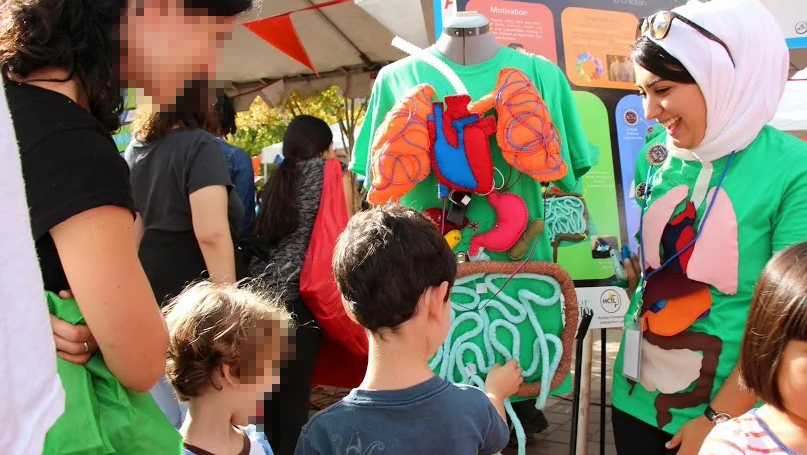
The final BodyVis shirt included flat representations of organs that were placed in the correct biological spot on the shirt. These organs could be removed to reveal where other organs were. The final product included embedded sensors so that the shirt could detect and reflect actual respiration and heart rate using lights. The shirt could also follow “snack time” to trace the digestive process, ending with sound effects to indicate the end of digestion – including the shirt passing gas!
Project Photos and Video
References and Links
Norooz, L., Mauriello, M., McNally, B., Jorgenson, A., & Froehlich, J.E (2015). BodyVis: A New Approach to Body Learning Through Wearable Sensing and Visualization. Proceedings of CHI 2015, pp. 1025 – 1034. Video available at https://youtu.be/3zh_yaslOnY