

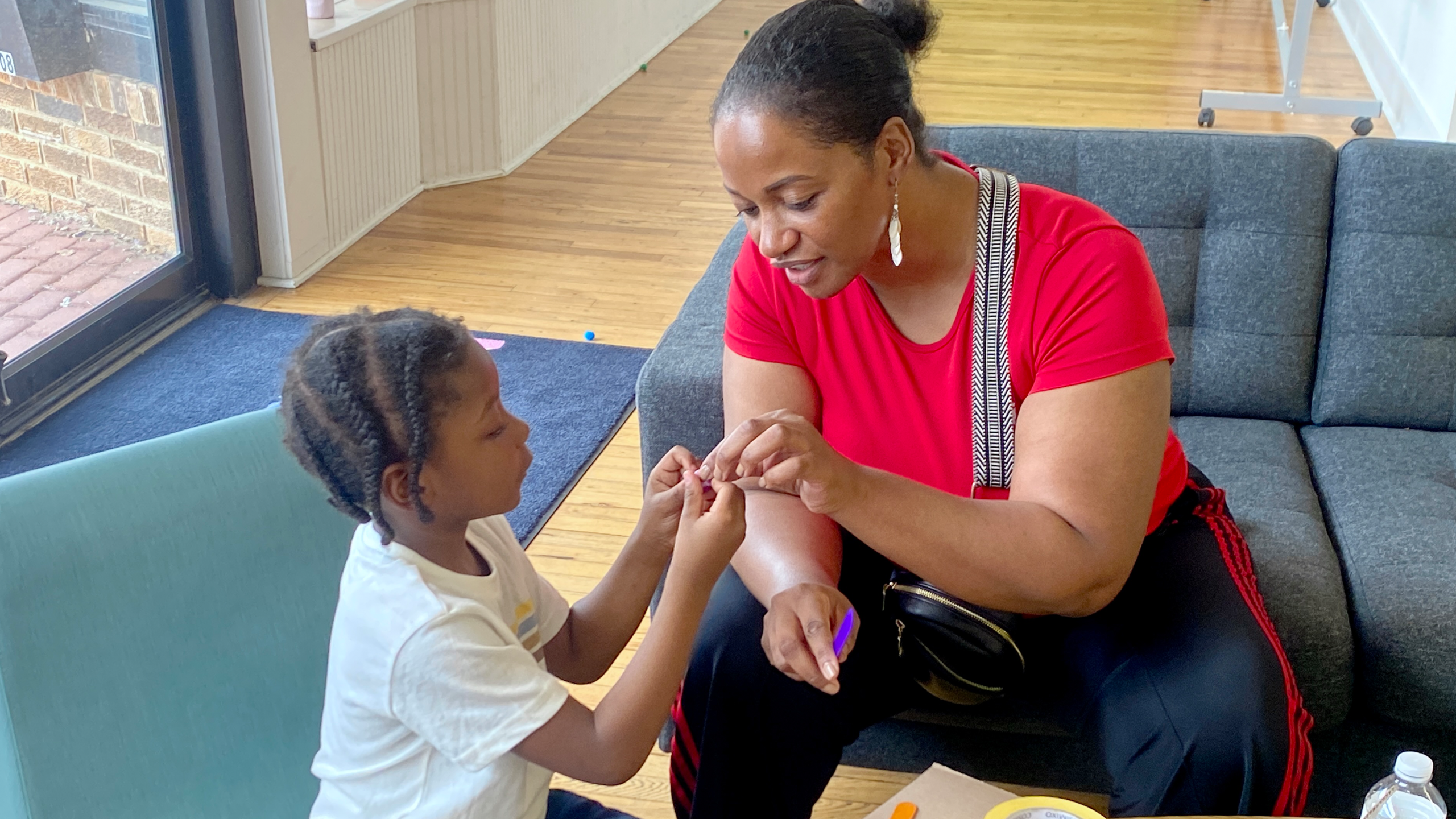
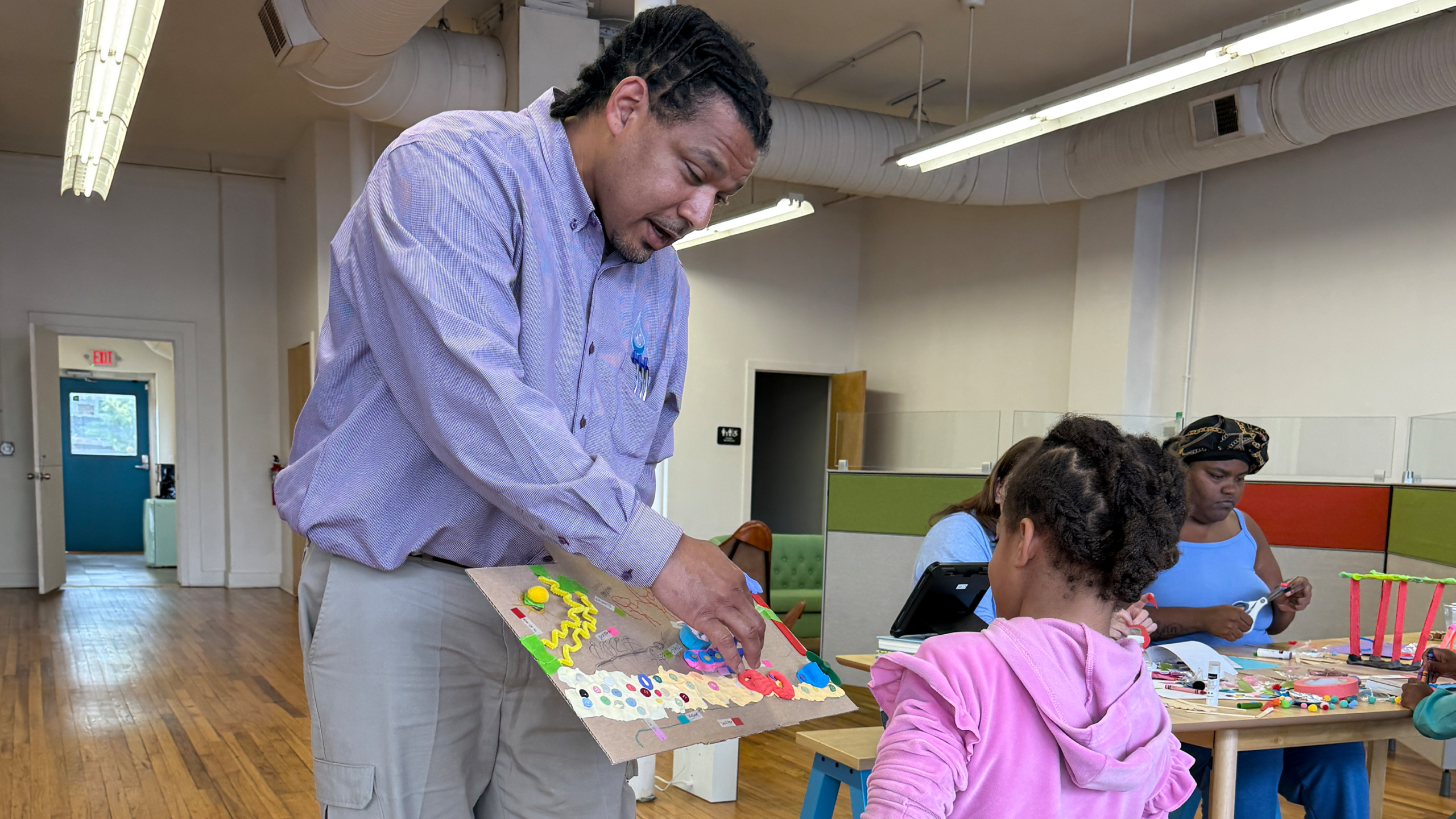
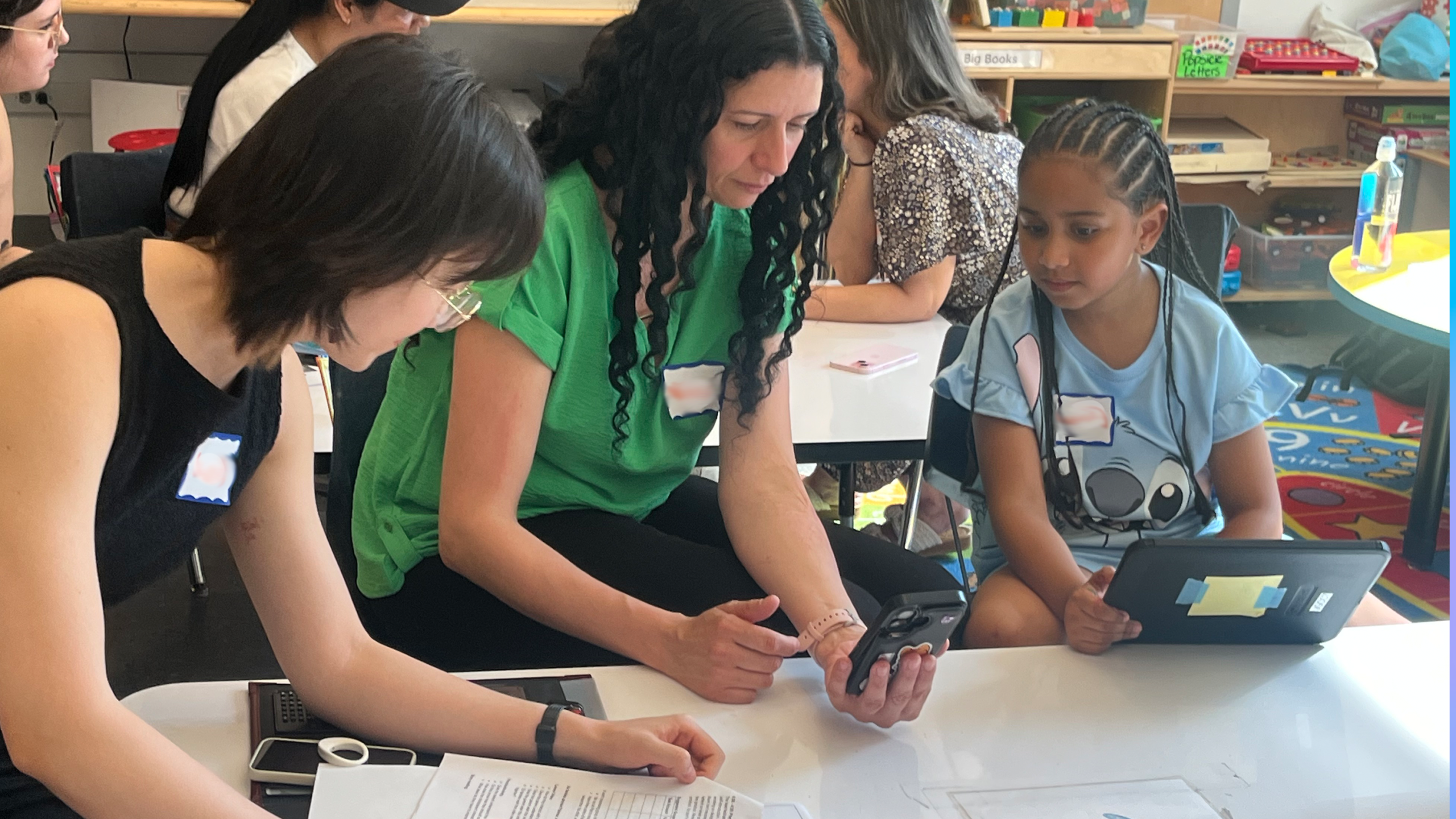
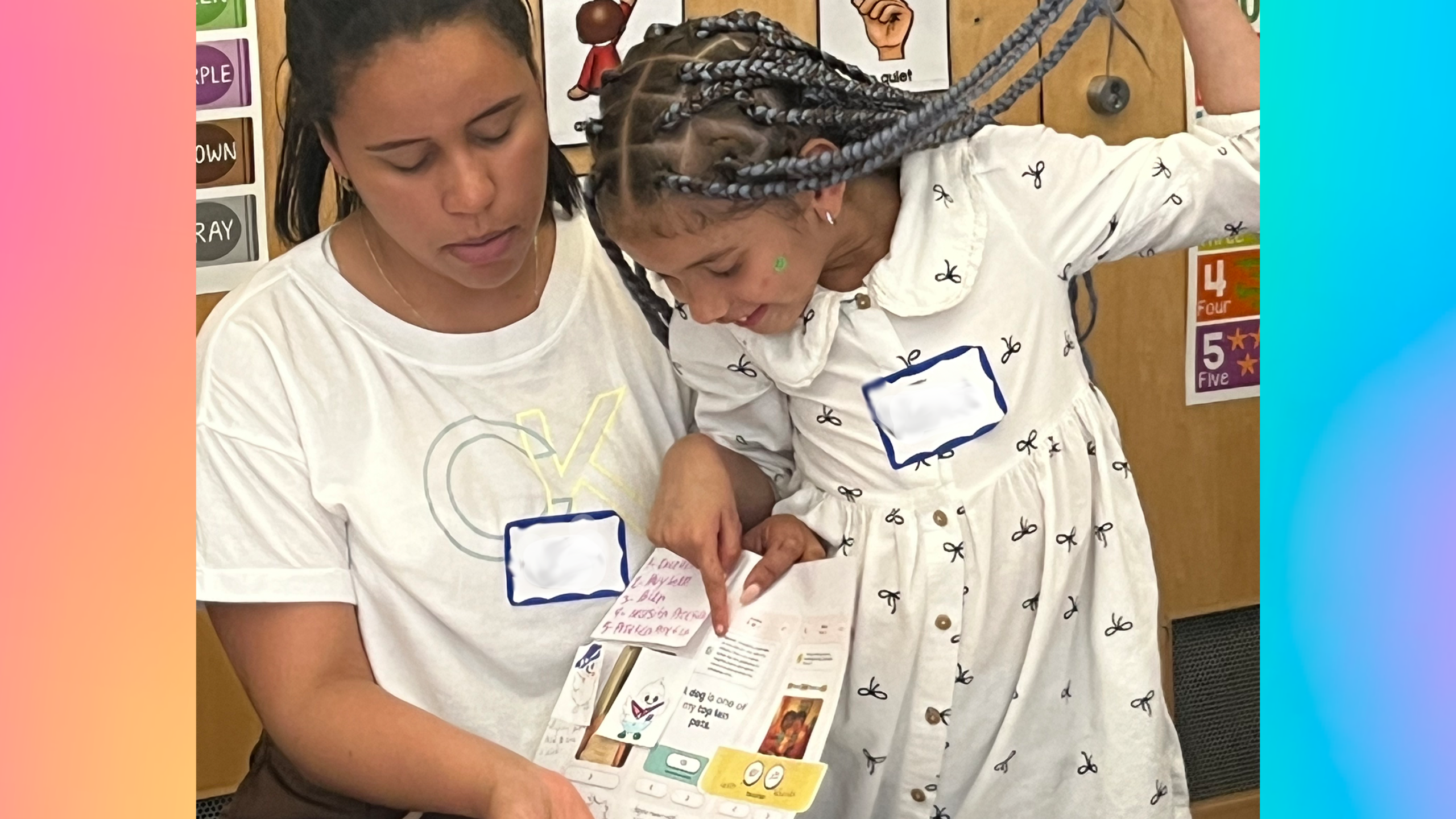
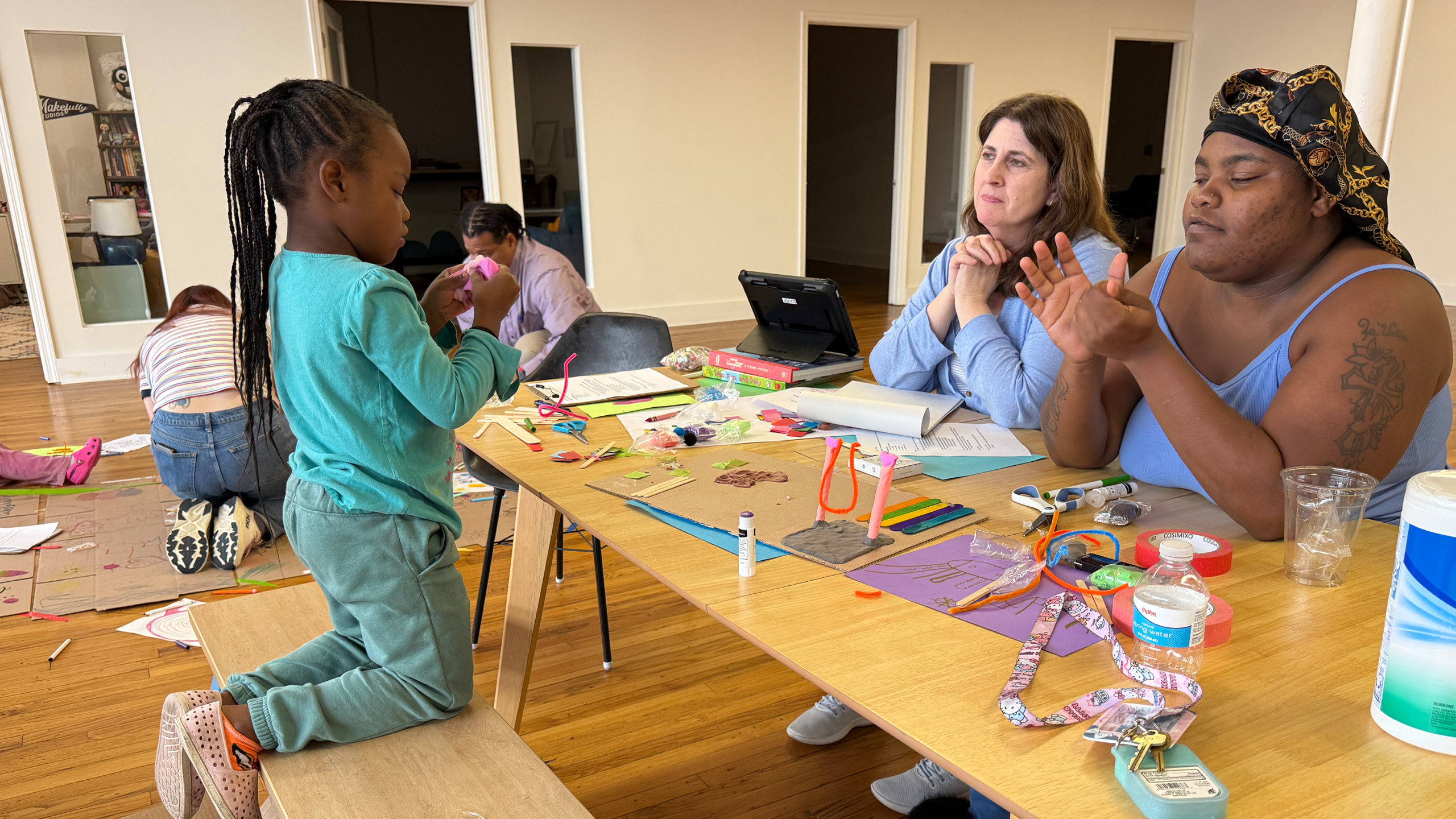
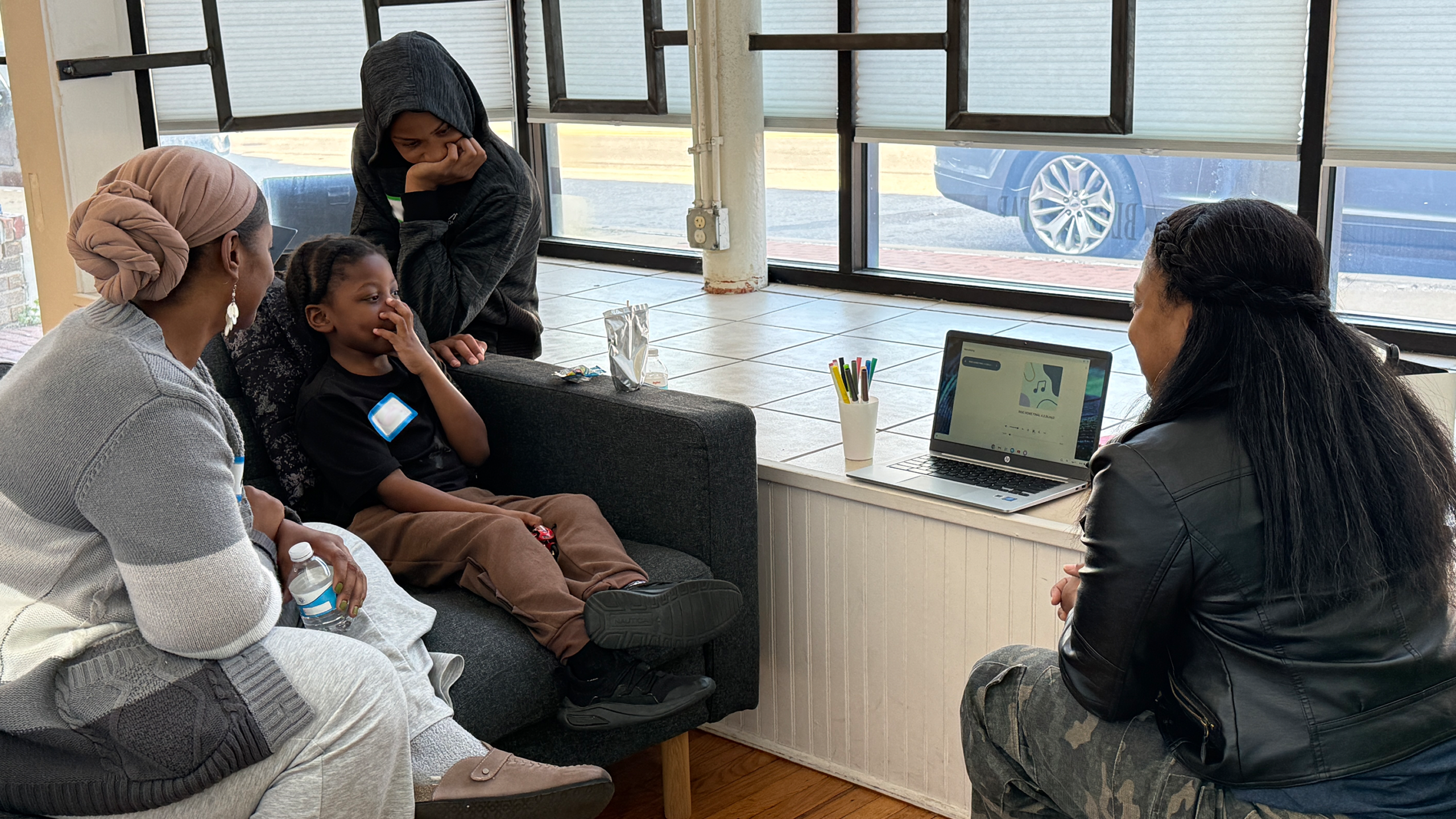
Most techniques in this toolkit were designed for co-design sessions where children work with adult researchers and designers to create kid-facing products. For technologies designed for families, consider co-designing with parents/caregivers and children as design partners. In these sessions, be mindful of the existing family dynamics, contexts, and habits they bring.
- As with kids, getting parents/caregivers into a co-design mindset takes intentional scaffolding and facilitation. When designing alongside their children, parents may naturally lean into playing a familial role with their children, like being a teacher or chaperone, instead of participating as co-designers. Co-design researchers should explain and model the co-design mindset for families before and during sessions, so caregivers know they are design partners too (see Adult Roles page).
- Scaffold sessions by centering design activities around what children and families already know & enjoy together. Asking them to reflect on their favorite things to do together or think about routines they might already have are good ways to center the shared family experience. Prompting families to document existing routines, like bedtime, commute, or shared hobby, before ideating helps make designing more concrete. For example, to learn more about how parents and kids tell stories, we had parents and kids engage in a shared activity and then explain the beginning, middle, and end of the activity to a Martian (see Mission from Mars). Centering design activities around shared experiences and goals invites families to draw on their unique perspective as a family.
- At times, it might be useful to separate parents/caregivers and children, especially when designing parent-facing experiences. Separating groups for different activities can help each individual surface their own perspective without looking to their family members for the “right answer.” When possible, bring the groups back together to share and build on each other’s ideas.
- Do
- Explain and model the co-design mindset at the start of the session
- Invite caregivers to contribute their own ideas, not just support their child’s
- Frame the child explicitly as a design partner
- Model team behaviors yourself: listening, building on ideas, asking clarifying questions, prototyping together
- Point caregivers to the Adult Roles page for concrete role options
- Don’t
- Assume caregivers know what co-design is, or that “helping your child” is the whole job
- Position the caregiver as a supervisor, helper, or playmate
- Leave the co-design mindset implicit and hope it emerges during the activity
- Correct caregiver behaviors mid-session without first having modeled the alternative
References
Hutchinson, H., Mackay, W., Westerlund, B., Bederson, B. B., Druin, A., Plaisant, C., … & Eiderbäck, B. (2003, April). Technology probes: inspiring design for and with families. In Proceedings of the SIGCHI conference on Human factors in computing systems (pp. 17-24).
Isola, S., & Fails, J. A. (2012, June). Family and design in the IDC and CHI communities. In Proceedings of the 11th International Conference on Interaction Design and Children (pp. 40-49).
Yarosh, S., & Abowd, G. D. (2011). Mediated parent-child contact in work-separated families. Proceedings of the SIGCHI Conference on Human Factors in Computing Systems (CHI 2011), 1185–1194.
Yip, J. C., Clegg, T., Ahn, J., Uchidiuno, J. O., Bonsignore, E., Beck, A., … & Mills, K. (2016, May). The evolution of engagements and social bonds during child-parent co-design. In Proceedings of the 2016 CHI Conference on Human Factors in Computing Systems (pp. 3607-3619).