
Product
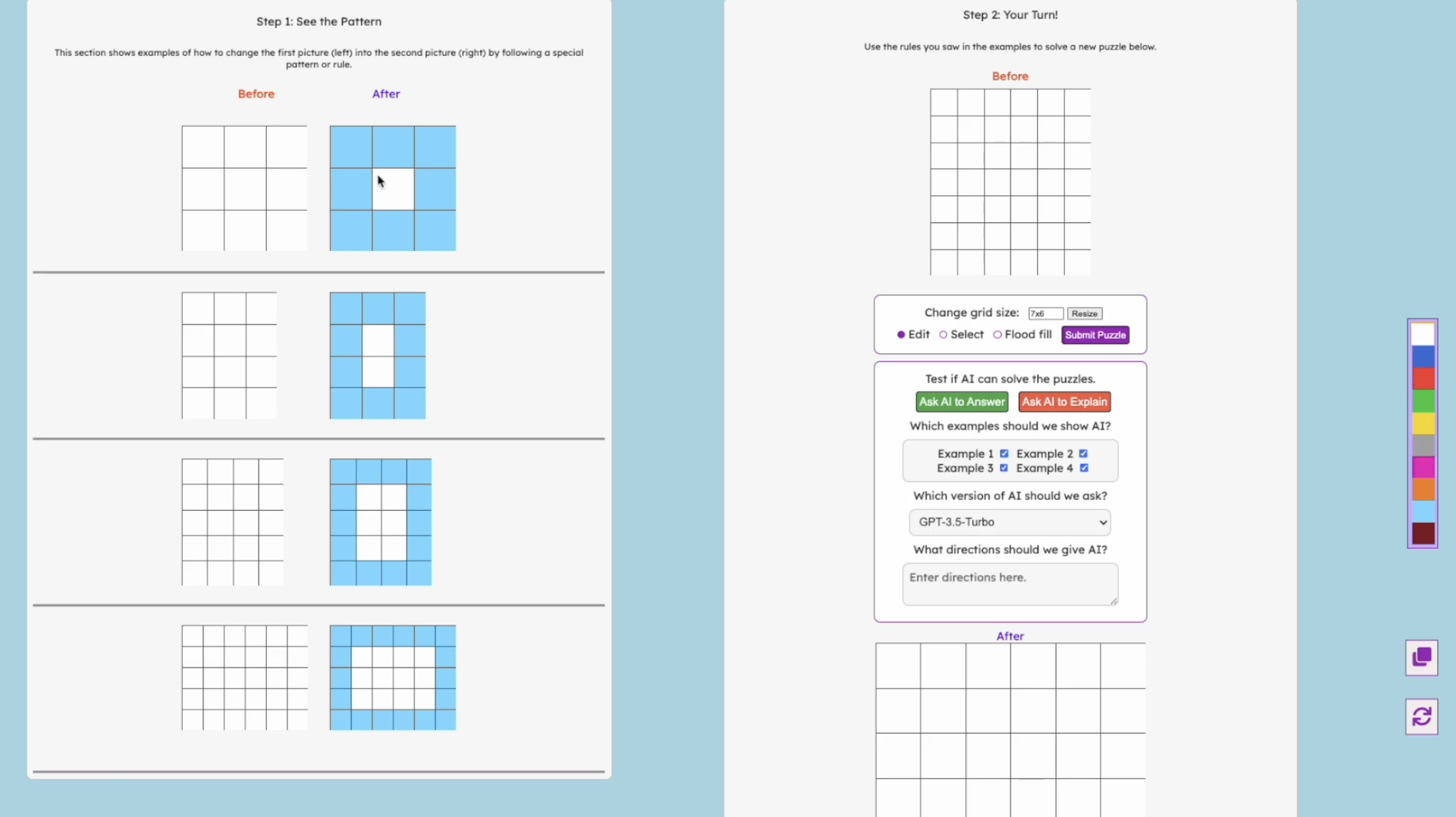
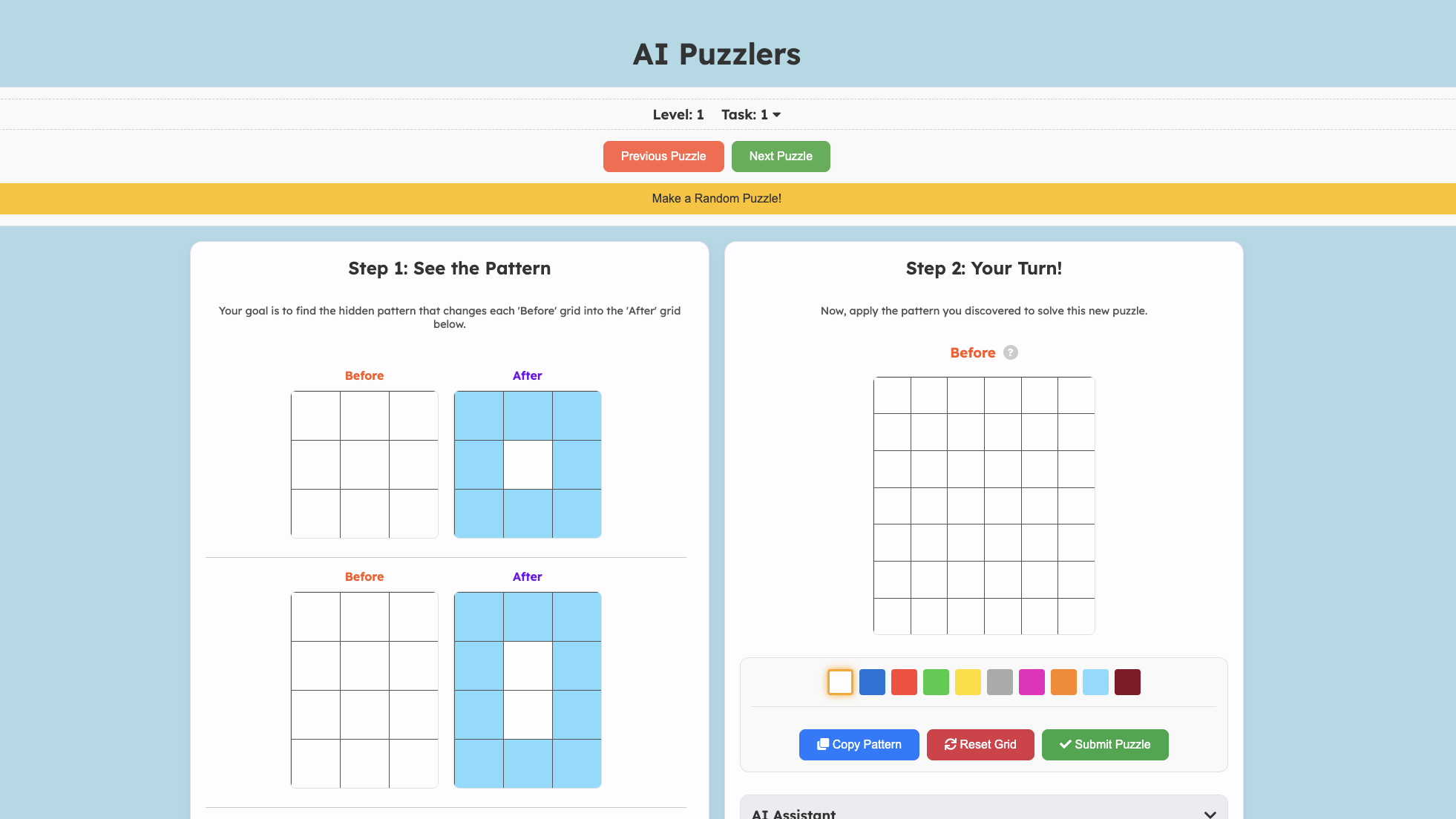
AI Puzzlers, a game designed to show children the ways in which they are “smarter” than AI.
Age and Demographic Target
6 – 11-year-old children
Team and Partners
University of Washington KidsTeam, led by graduate student Aayushi Dangol, under the supervision of Dr. Jason Yip
Product development stage
Co-designers from the UW KidsTeam worked on this project during their KidsTeam Summer Camp. The product is now complete and available online.
Background
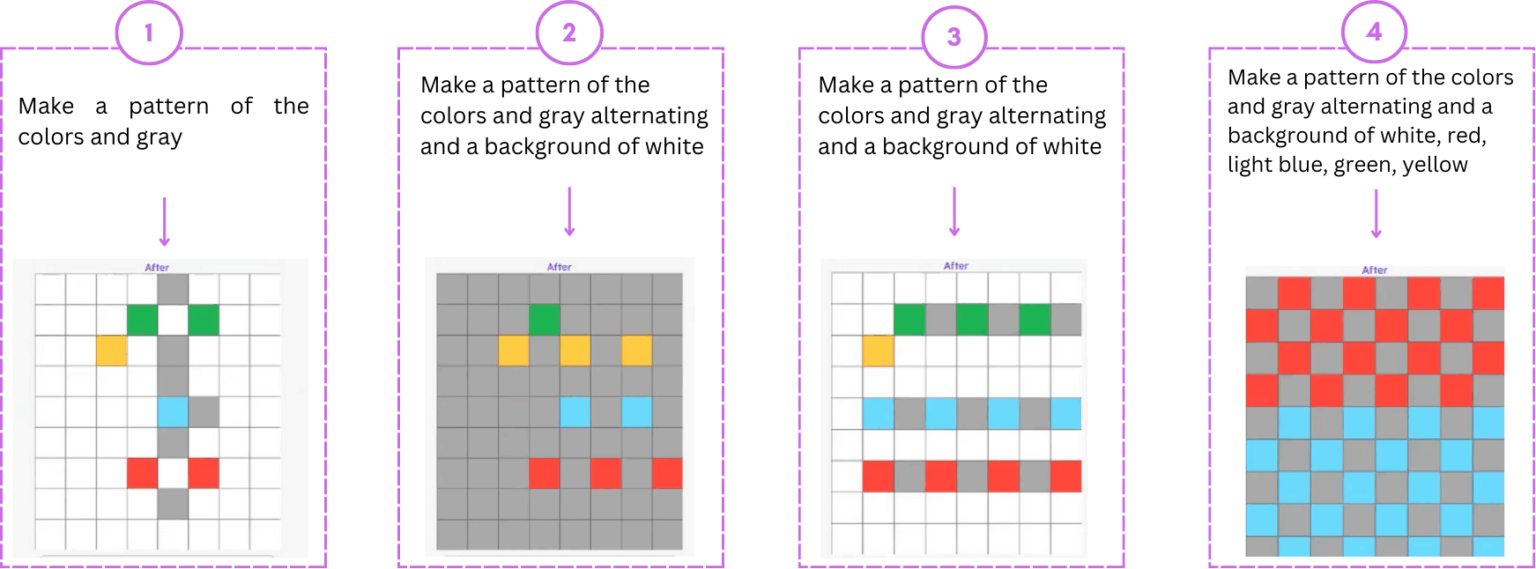
While adults are often able to fact-check AI due to their greater content knowledge and reading ability, children often do not have the background or skills to do so. As a result, children may see AI as all-knowing or magical. AI Puzzlers were designed to visually demonstrate to children ways in which AI can make mistakes. The visual format also works for children with minimal reading skills.
Design Question(s)
How can ARC (Abstraction and Reasoning Corpus)-based puzzles be adapted so that children not only find them engaging, but are also encouraged to interrogate and make sense of the AI’s reasoning? (ARC puzzles test a kind of visual reasoning that humans do much better than AI).
Process
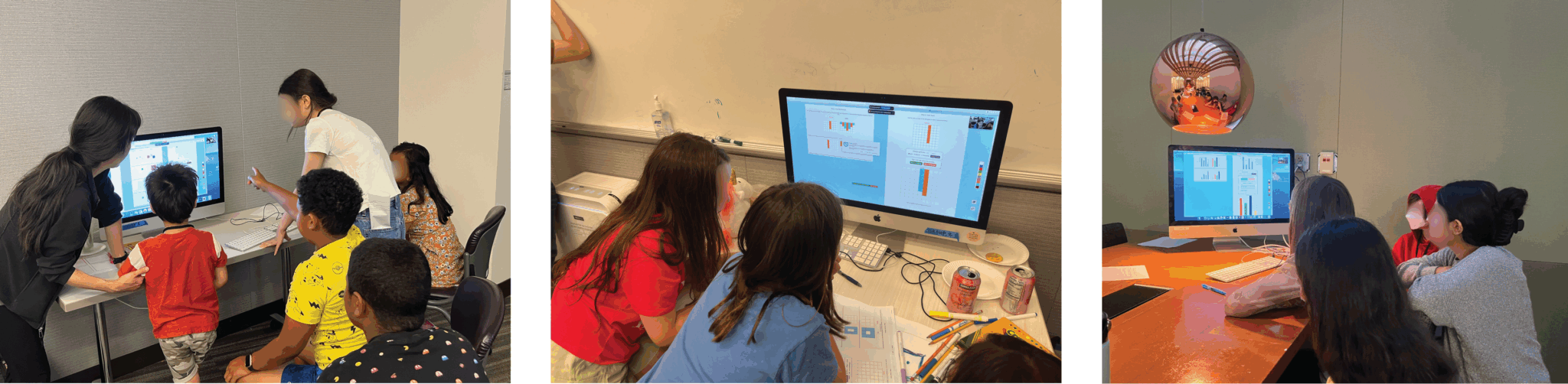
Researchers brought AI Puzzlers to KidsTeam UW during the Summer Camp program. Children were allowed to explore AI Puzzlers during these sessions and their feedback noted. Using Sticky Notes, participants identified features that felt fun, confusing, or frustrating, and generated design ideas for improvement. In addition, children engaged in think-aloud exploration, verbalizing their reasoning as they solved puzzles, which provided insights into how they understood the AI’s behavior and where breakdowns occurred. Children also worked on Big Paper drawings, sketching how they imagined the AI should behave, what kinds of puzzles would be engaging, and how feedback could be made clearer. As a result of these co-design sessions with children, the team refined AI Puzzlers interface for clarity, added hints to guide AI reasoning, and adjusted the feedback messages so they were more encouraging and easier to understand.
Final Product
AI Puzzlers, available freely to the public at https://www.ai-puzzlers.com/
Project photos and video