
Technique Summary
Layered Elaboration is best used when designing screen-based media or other media that is 2-dimensional. Groups build upon each other’s ideas and do not “destroy” the initial idea. Layered Elaboration is a good technique to use when expense, time, and space are limited.
When and why to use this technique
Layered Elaboration is best used when designing screen-based media or other media that is 2-dimensional. Groups build upon each other’s ideas and do not “destroy” the initial idea. Layered Elaboration is a good technique to use when expense, time, and space are limited.
Supplies and Preparation
- Supplies: Write-on clear transparency film (clear acetate sheets), white paper, clipboards or another hard surface and binder clips, permanent markers (i.e., Sharpies)
- Preparation: You may want to have the first level for the Layered Elaboration prepared. This might mean printing out a wireframe or having the initial idea for a technology printed out or drawn by designers from earlier sessions.
How to use this technique
- Give each group a piece of blank paper on a clipboard along with markers. On the blank paper, have one team member put a “+” in one predetermined corner. The “+” will help you to line up the layers in the proper orientation later.
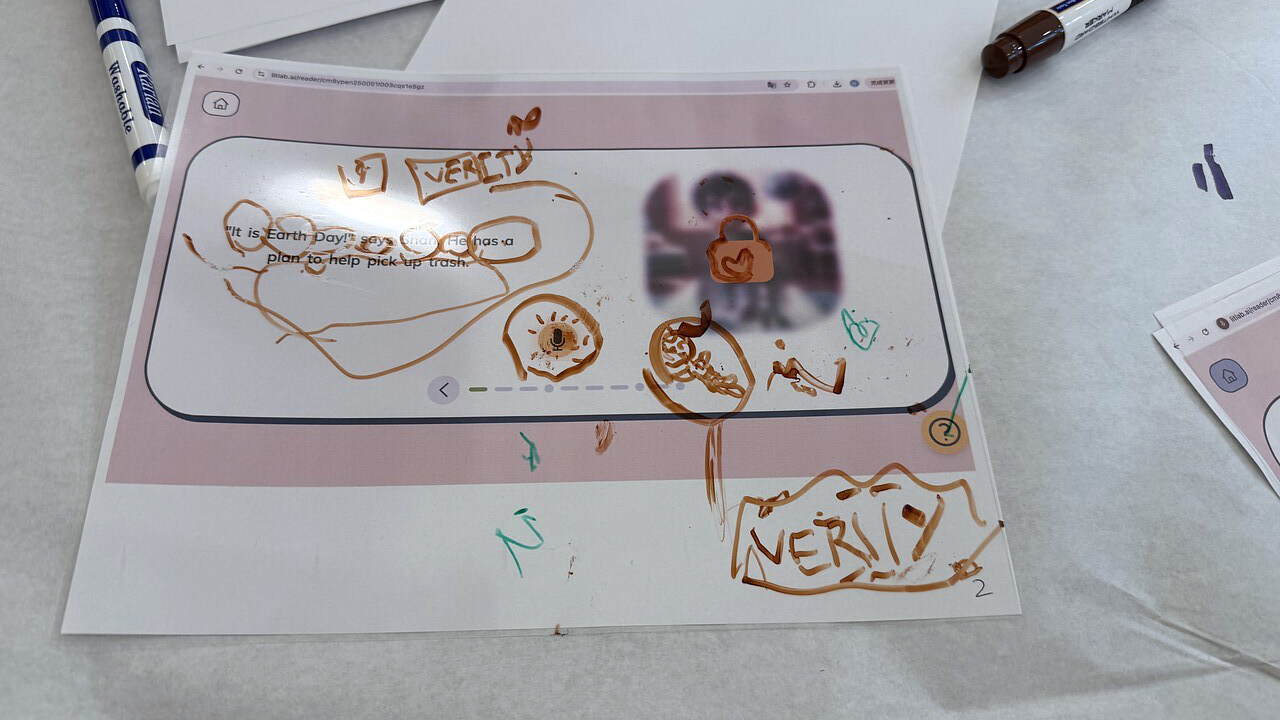
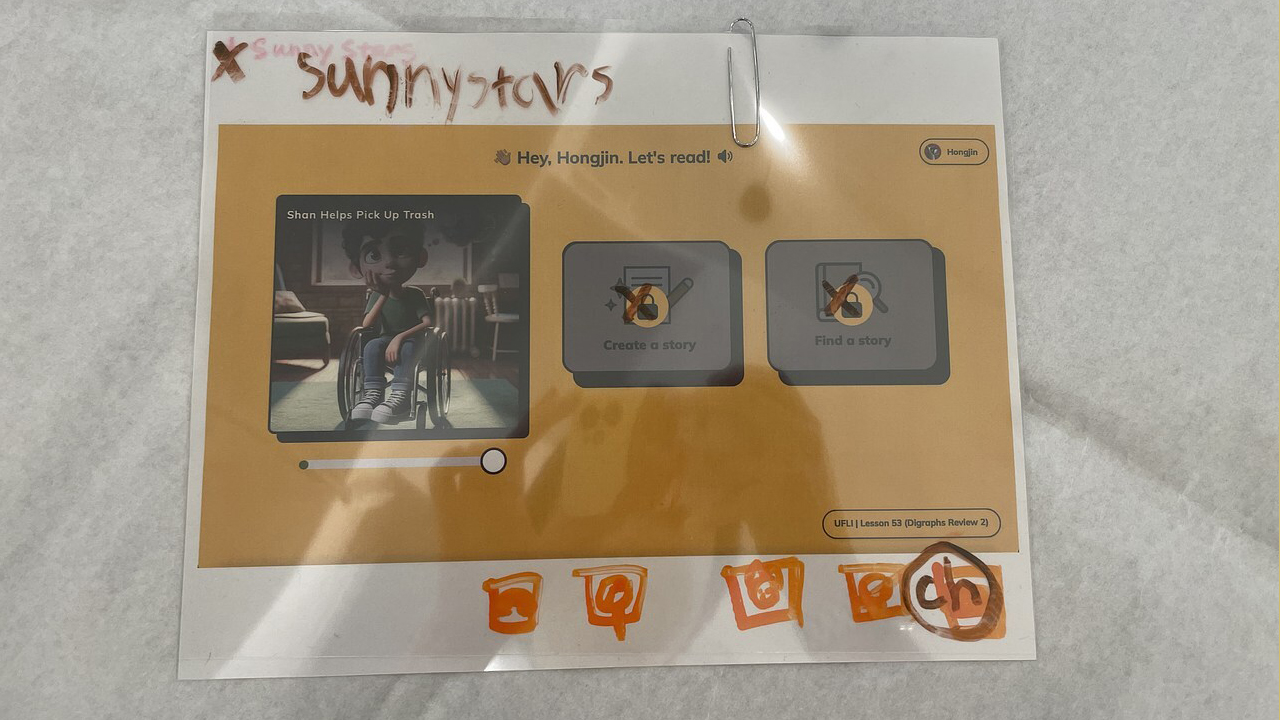
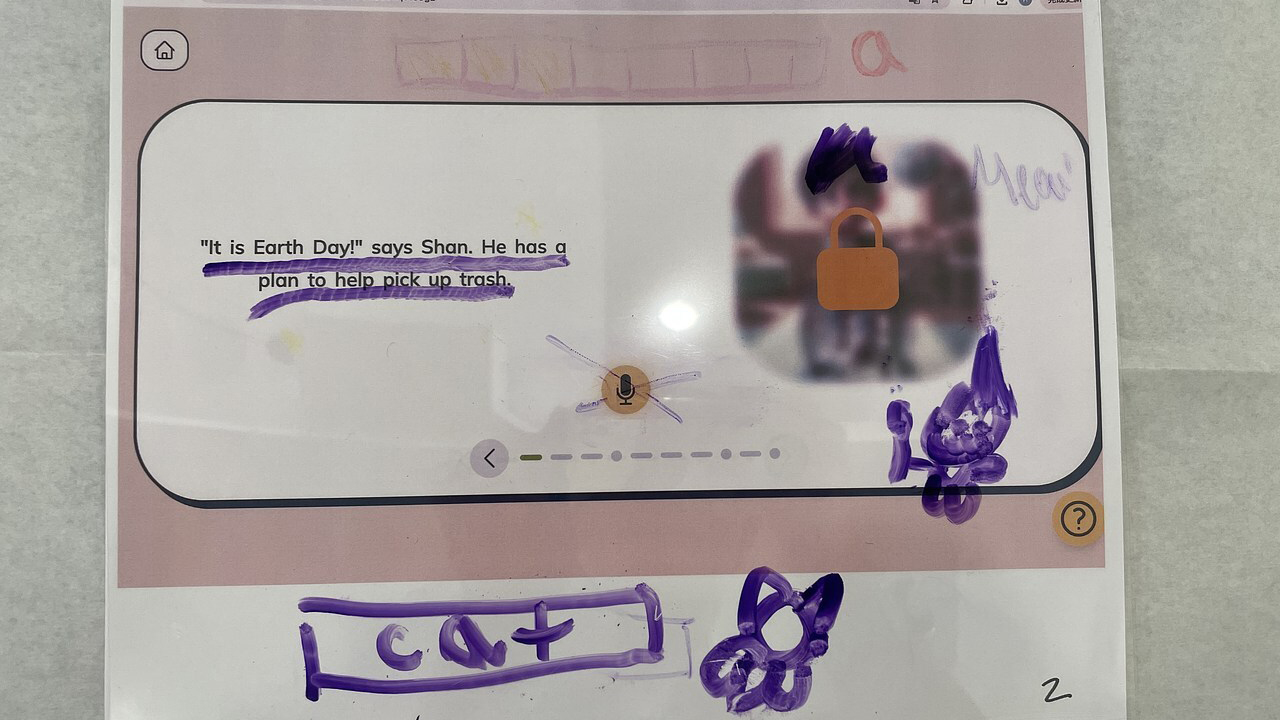
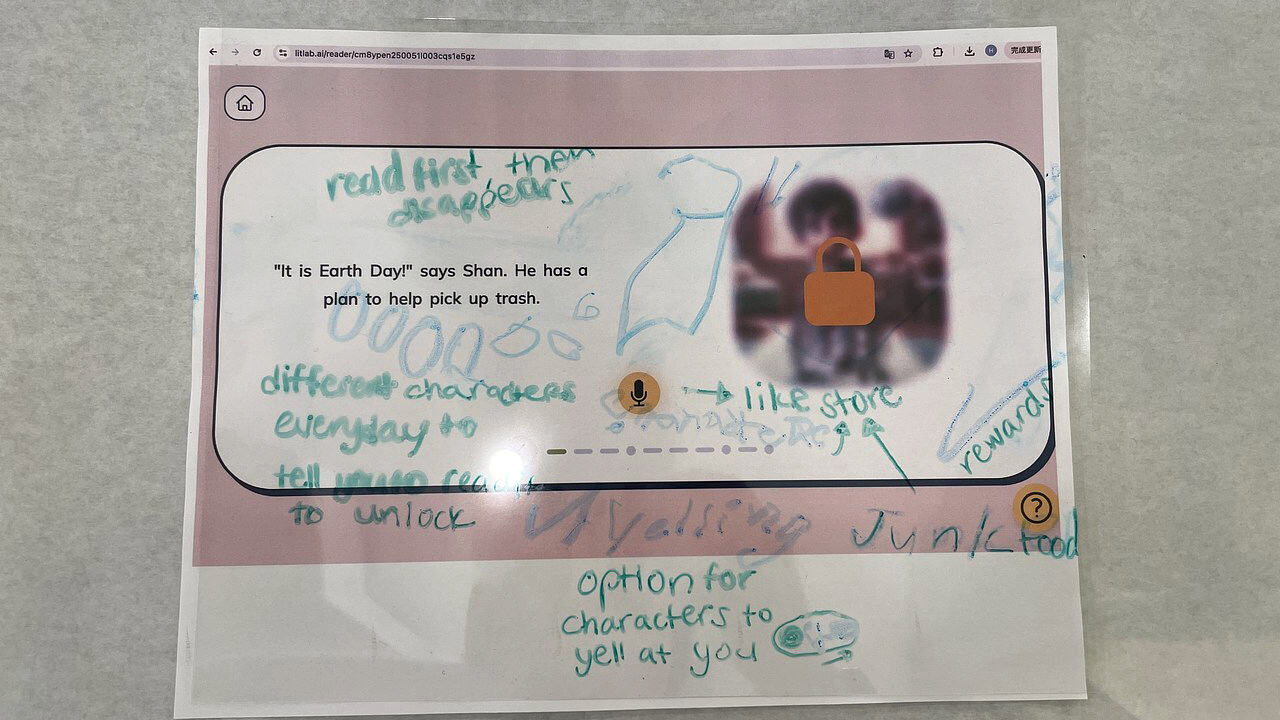
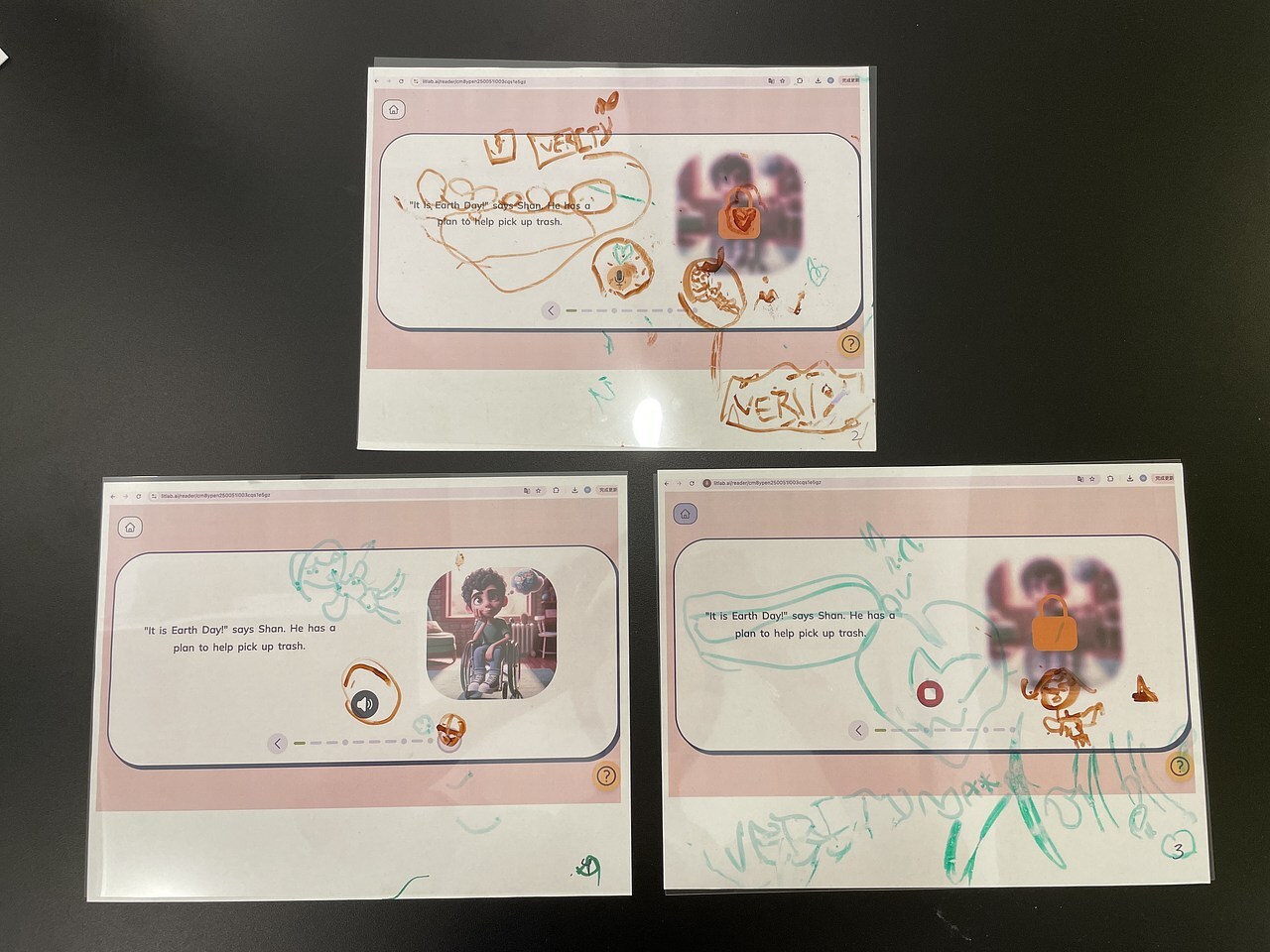
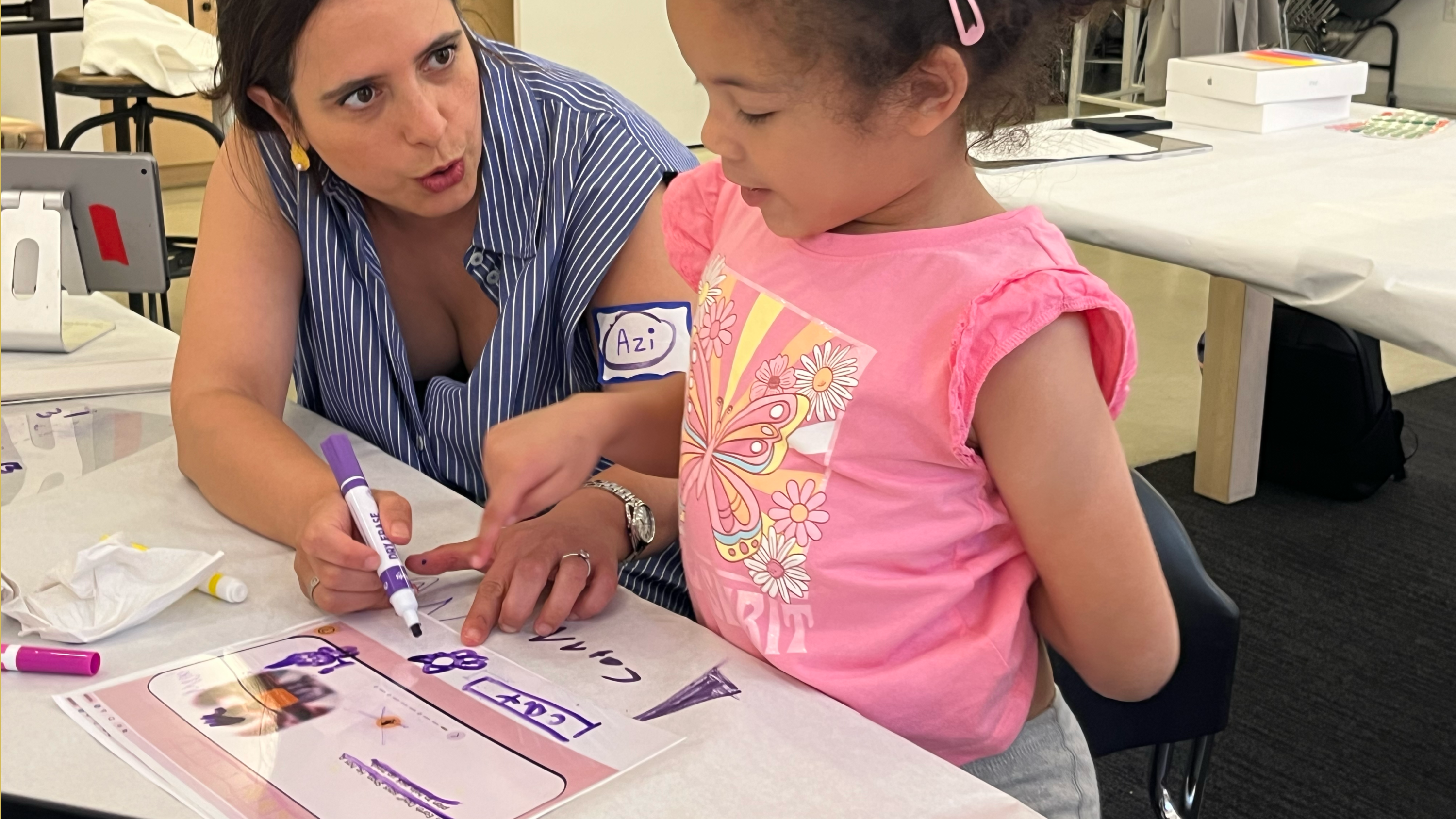
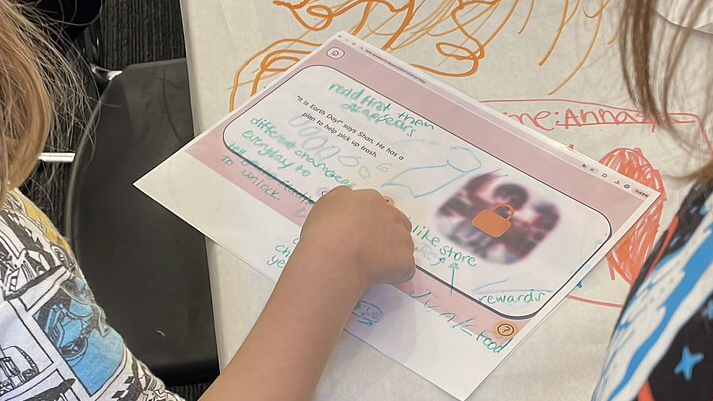
- Each small group creates one initial solution to the design problem on the paper. For a typical session, this means you might start with 3-4 solutions (one per group). Alternatively, you may start with a pre-existing interface or idea. For example, for a reading app recently, groups were given a screenshot of a read-aloud interface and informed that users often tapped the microphone but did not read along. They were then asked to add ideas for how to encourage users to read along.
- All groups come back together for a “stand-up meeting” where each group briefly presents their ideas to the other groups (if using a pre-existing interface, this would happen before the first rotation). The meeting is a stand up meeting so that it happens quickly; with two or three of these happening during the design session they need to be efficient to keep the design session moving and completing in time. When the stand up meeting is completed, groups then pass the initial ideas to another group.
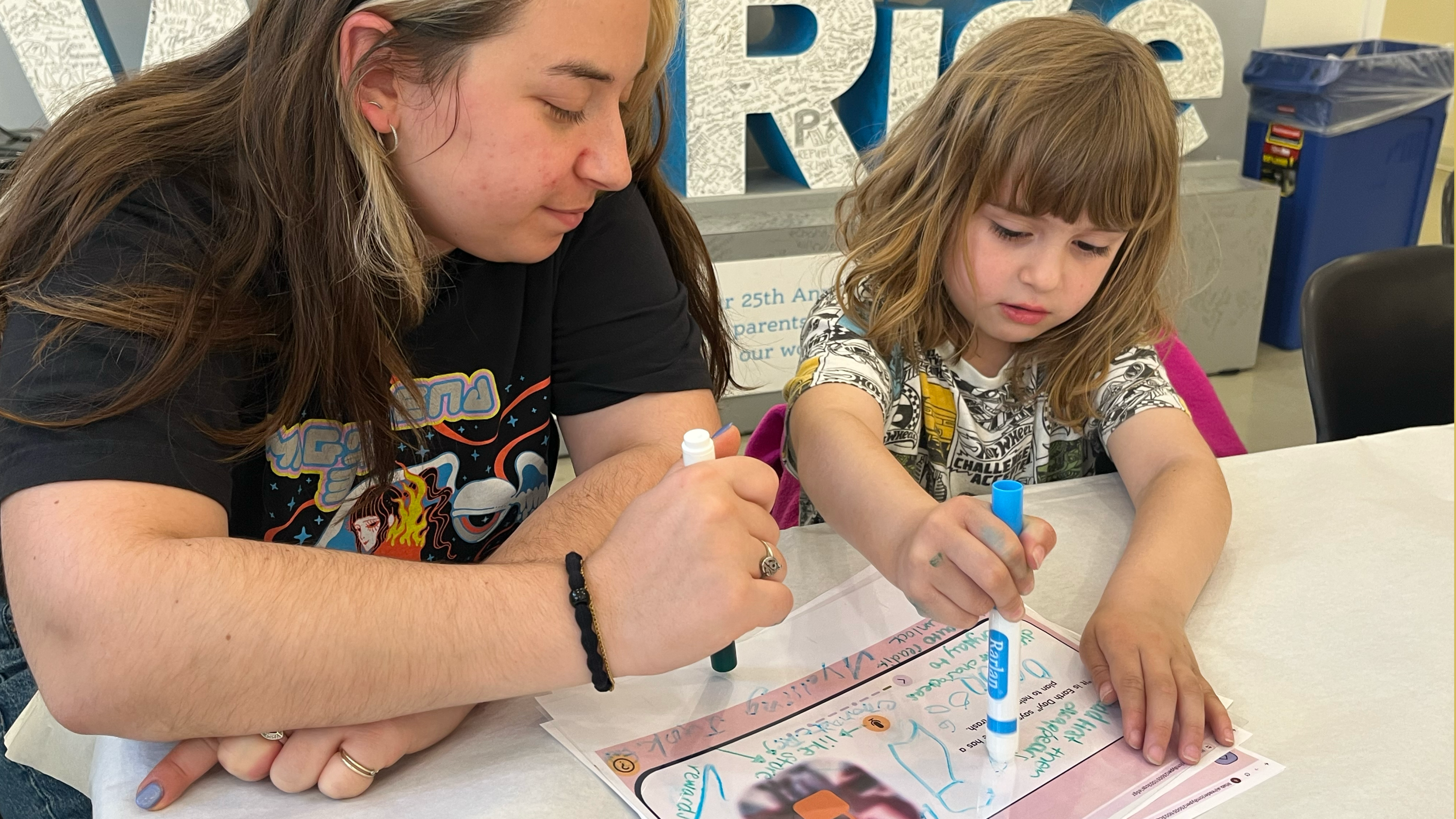
- Put a clear overhead transparency on top of each initial idea, along with the registration point (i.e., “+” in one predetermined corner). If color is not important to the design, you might choose to have each group use a different color (i.e., group one is red, two is green, etc.) for ease of seeing what was added or changed at each layer.
- New groups elaborate on the initial idea by adding to, editing, and changing the initial storyboard using markers on their transparency. However, all deletions are done by crossing out ideas instead of erasing them, thus leaving all previous iterations intact. This is done so that no co-designer has to “ruin” or “erase” the ideas of other co-designers, which some child co-designers have indicated that they do not want to do.
- Continue with stand-up meetings and new transparencies iteratively until each group has had a chance to elaborate on each idea.
- Once all groups have had a chance to design on each problem, a final debrief is held. During this meeting, each group presents the final, elaborated idea.
See this technique in action
References
Fails, J.A., Guha, M.L., & Druin, A. (2013). Methods and Techniques for Involving Children in the Design of New Technology for Children. Foundations and Trends in Human-Computer Interaction 6(2).
Walsh, G., Druin, A., Guha, M.L., Golub, E., Hatley, L., Bonsignore, E., Franckel, S. (2010). Layered Elaboration: A new technique for co-design with children. Proceedings of the SIGCHI Conferences on Human Factors in Computing Systems, Atlanta, Georgia, 1237-1240. Paper presented by G. Walsh.
Walsh, G., Foss, E., Yip, J., and Druin, A. (2013). FACIT PD: A framework for analysis and creation of intergenerational techniques for participatory design. In Proceedings of CHI 2013, 2893 – 2901.