
Technique Summary
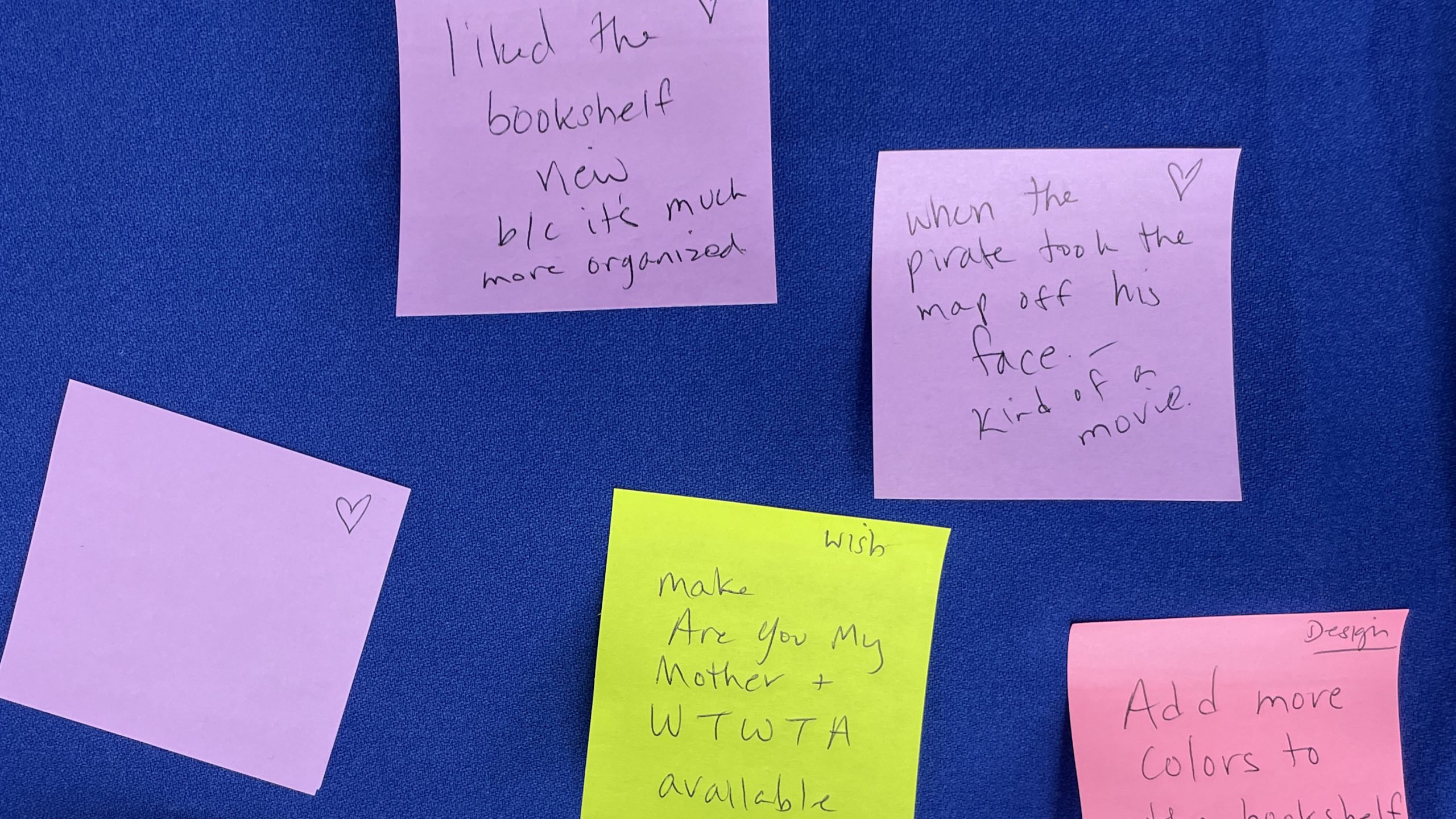
Sticky noting is an evaluation technique in which individual co-designers write feedback and ideas on sticky notes which are then grouped in a frequency analysis.
When and why to use this technique
Sticky noting can be used to evaluate fully developed technologies created by other teams used to inspire ideas or guide new designs, or iteratively on prototypes created at any stage of the team’s design process.
Supplies and Preparation
- Supplies: Standard-sized sticky notes (various colors can be useful), pens/pencils, a large vertical surface such as a whiteboard, markers to use on the vertical surface
How to use this technique
- Every member of the team should get their own pad of sticky notes and a pen or pencil.
- Everyone has the opportunity to interact with the technology or prototype to be evaluated. Sometimes this may happen individually; other times it may be in pairs or small groups.
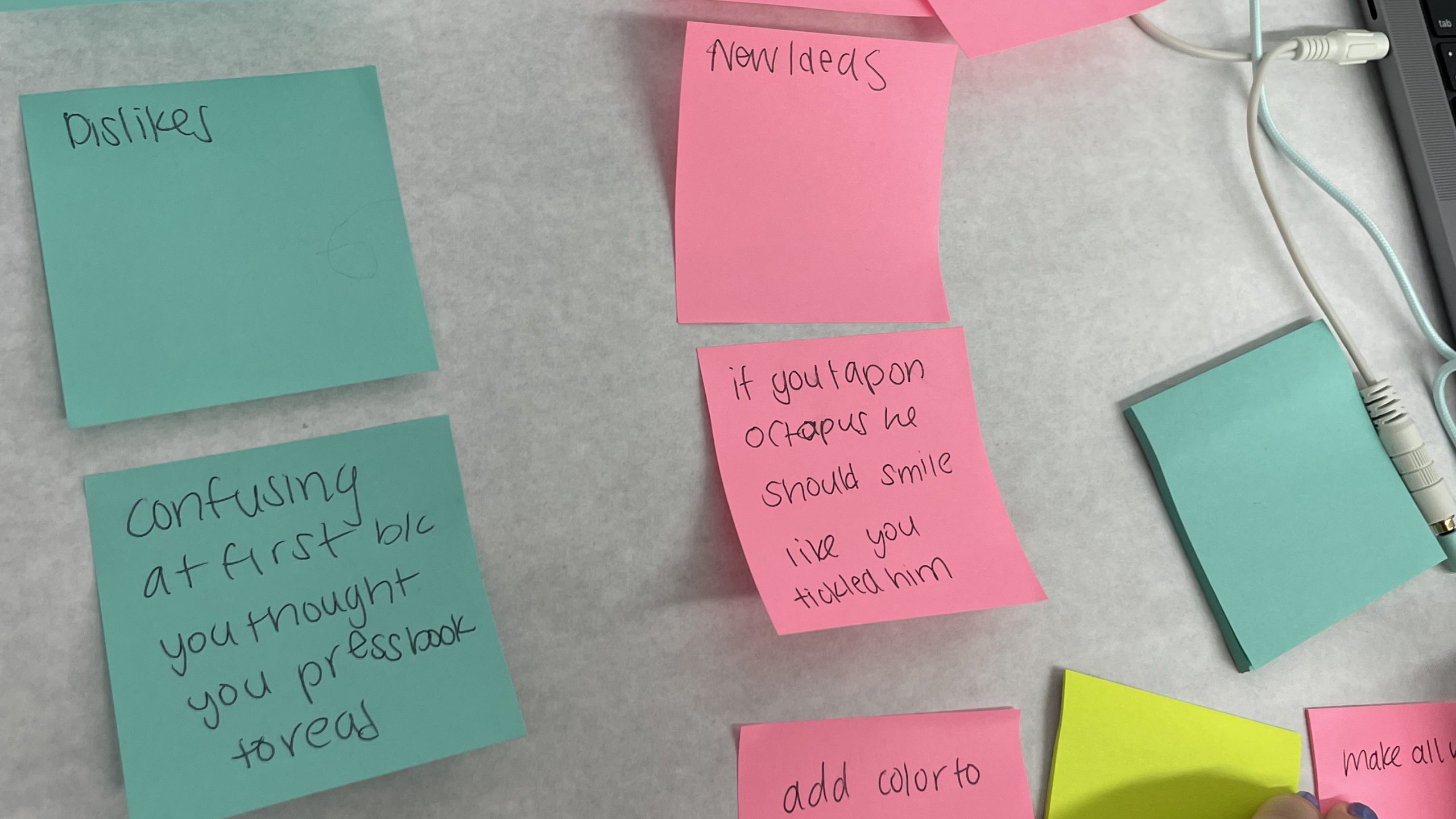
- While interacting with the technology or prototype, each member of the group writes down one idea/reaction per sticky note. Often these are in categories, such as likes, dislikes, surprises, or design ideas. Each member of the team is responding to the technology and recording their ideas on their own sticky notes. Note: if there are younger children on the team who are not comfortable writing, they may prefer to dictate their ideas to an adult who can record for them.
- Adult co-designers should remember that they, too, should be writing their own ideas on sticky notes, as well as talking with children about their ideas if adults are writing for children. There can be a tendency with Sticky Notes for adult co-designers to fall into the role of scribe and simply write down ideas of children. While this is important, bear in mind the role of co-design is to work together, so the adult design thoughts are important to record as well.
- As notes are written, one member of the team should come around collecting notes. Designers should note which category they fall into (i.e., likes, dislikes, surprises, design ideas). These then get taken to another team member who is at the large vertical surface (i.e., white board).
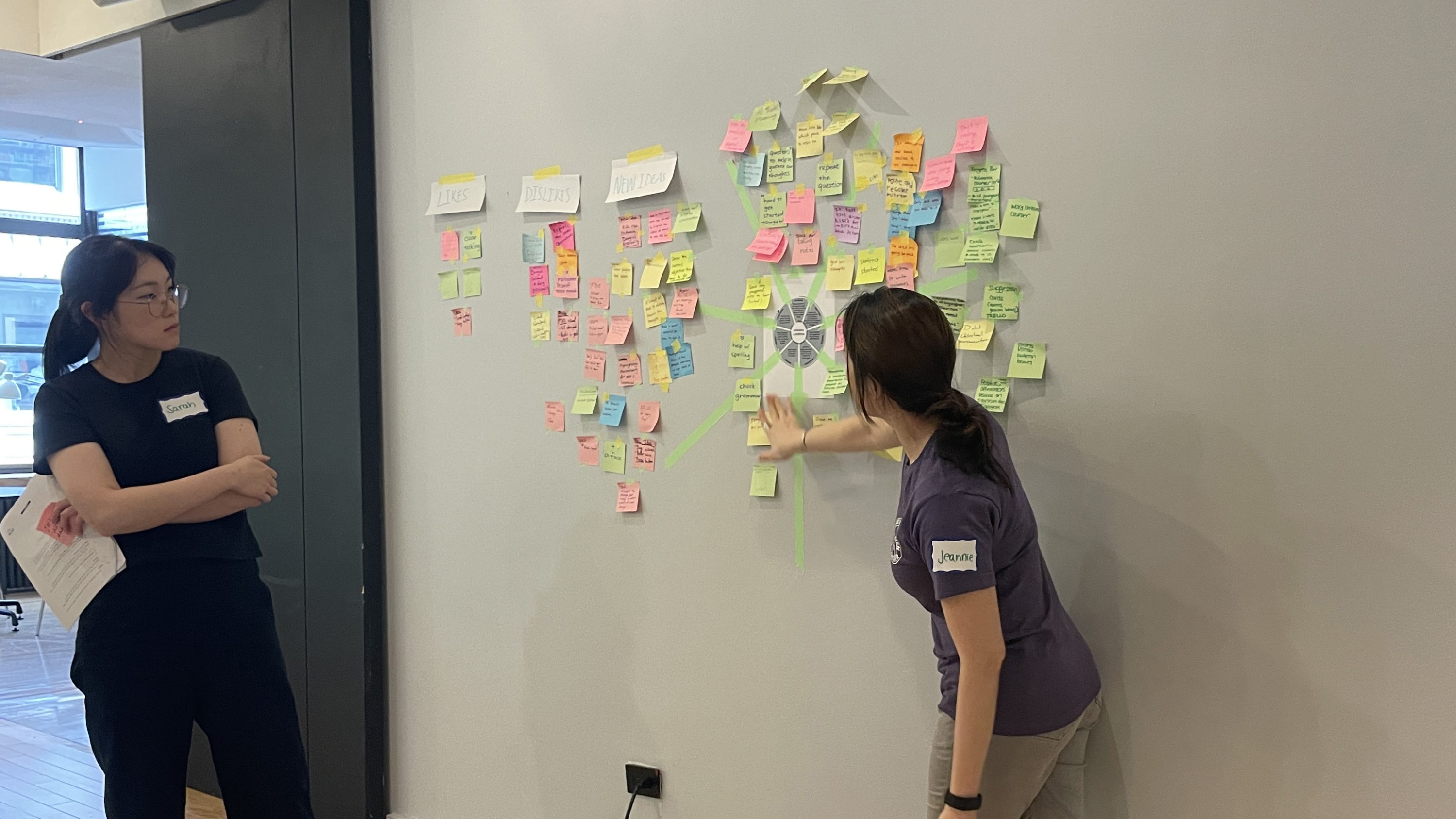
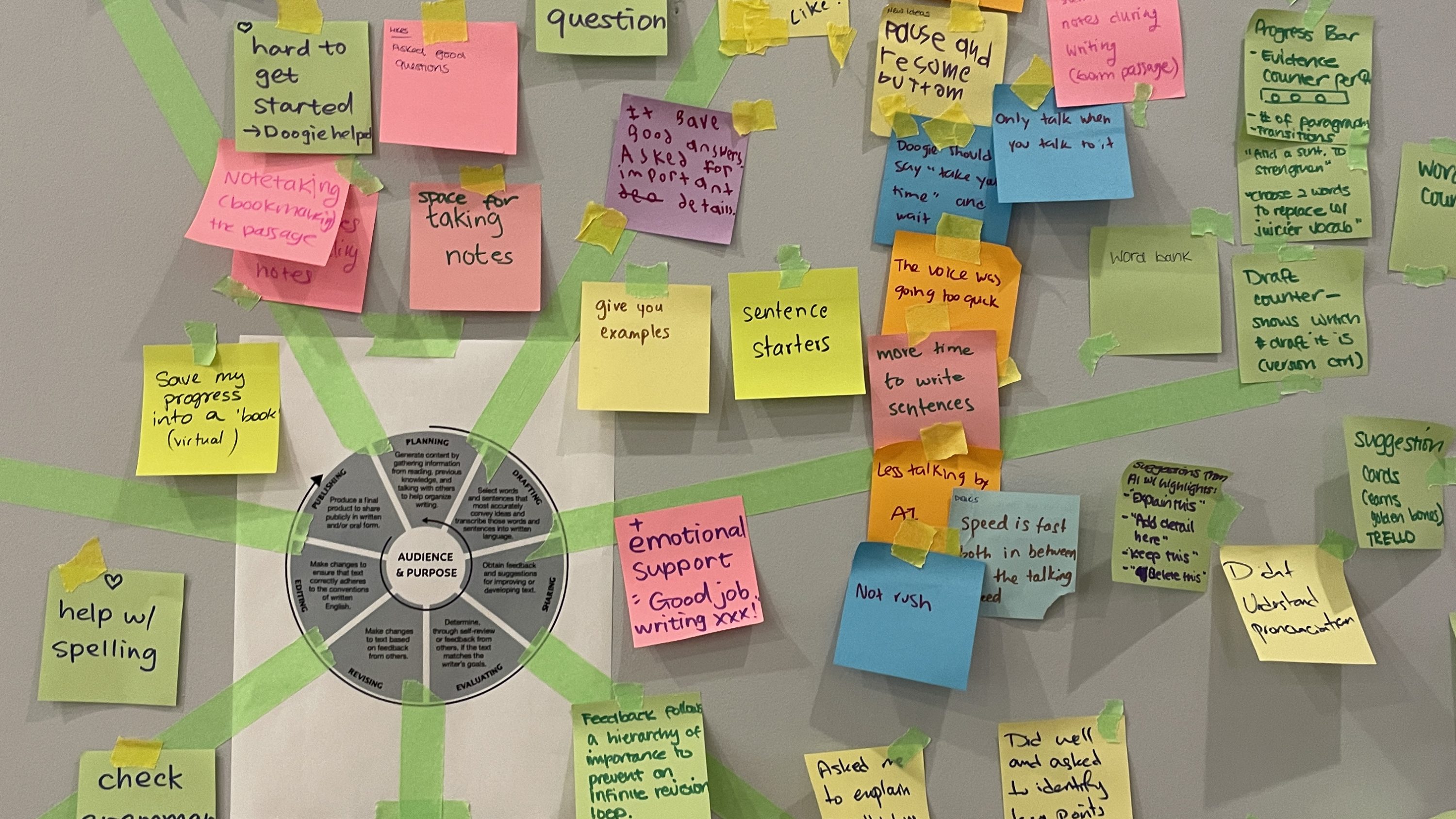
- The team member(s) who are at the white board quickly start to gather the notes into groupings. For example, perhaps there are many likes about a particular character, or dislikes about a button that is glitching. As more notes come in, they get moved into a quick frequency analysis in which sticky notes are grouped by topic.
- Once everyone has written all of the notes that they want to, the design team members at the board note what each category is. In a kind of member check during the Big Ideas, all group members are invited to review the categories and confirm that their ideas have been appropriately categorized and that their thoughts have been taken down correctly and completely.
- Variations may include differently colored sticky notes for different groups of interest – perhaps older and younger children.
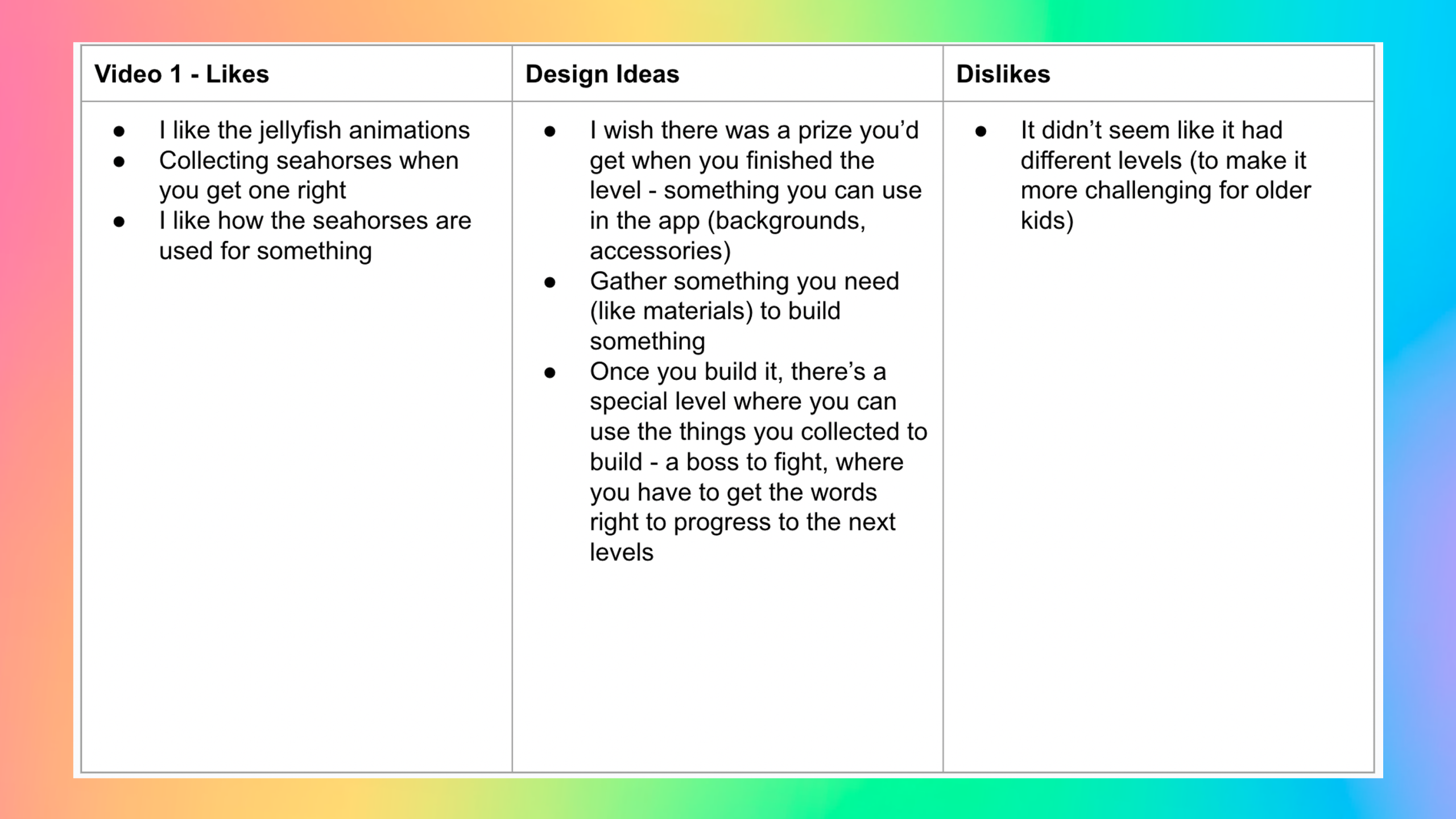
- If employing Sticky Noting online, teams can choose to send physical sticky notes to co-designers and have them write on these and then upload photos of the sticky notes. Alternatively, teams can choose to use tools such as Miro (or other digital white boards) or Google Slides that allow non-co-located users to collaboratively contribute digital sticky notes.
See this technique in action
References
Fails, J.A., Guha, M.L., & Druin, A. (2013). Methods and Techniques for Involving Children in the Design of New Technology for Children. Foundations and Trends in Human-Computer Interaction 6(2).
Fails, J.A., Ratakonda, D.K., Koren, N., Elsayed-Ali, S., Bonsignore, E., and Yip, J. (2022). Pushing boundaries of co-design by going online: Lessons learned and reflections from three perspectives. International Journal of Child-Computer Interaction 33: 100476.
Walsh, G., Foss, E., Yip, J., and Druin, A. (2013). FACIT PD: A framework for analysis and creation of intergenerational techniques for participatory design. In Proceedings of CHI 2013, 2893 – 2901.