

Technique Summary
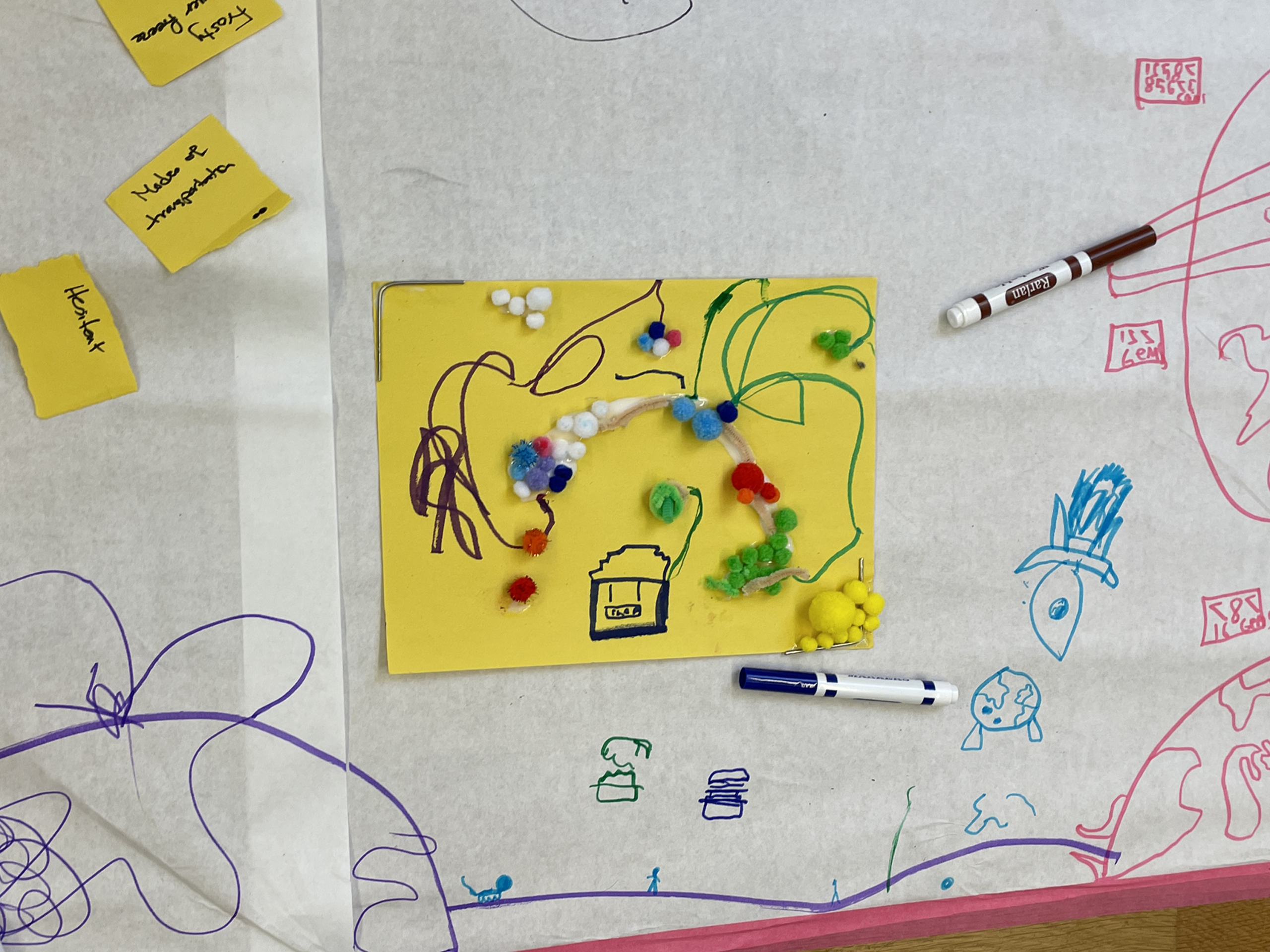
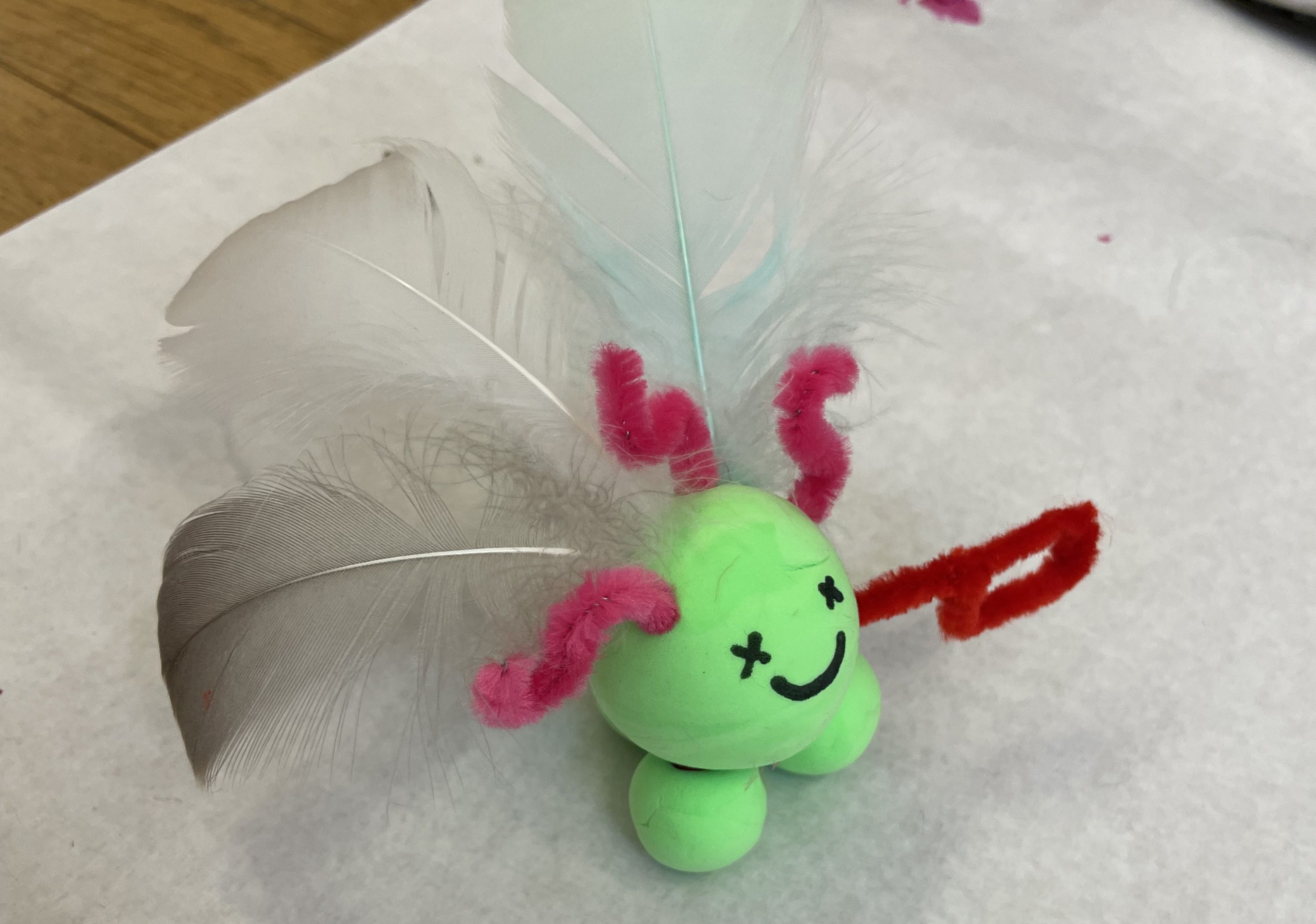
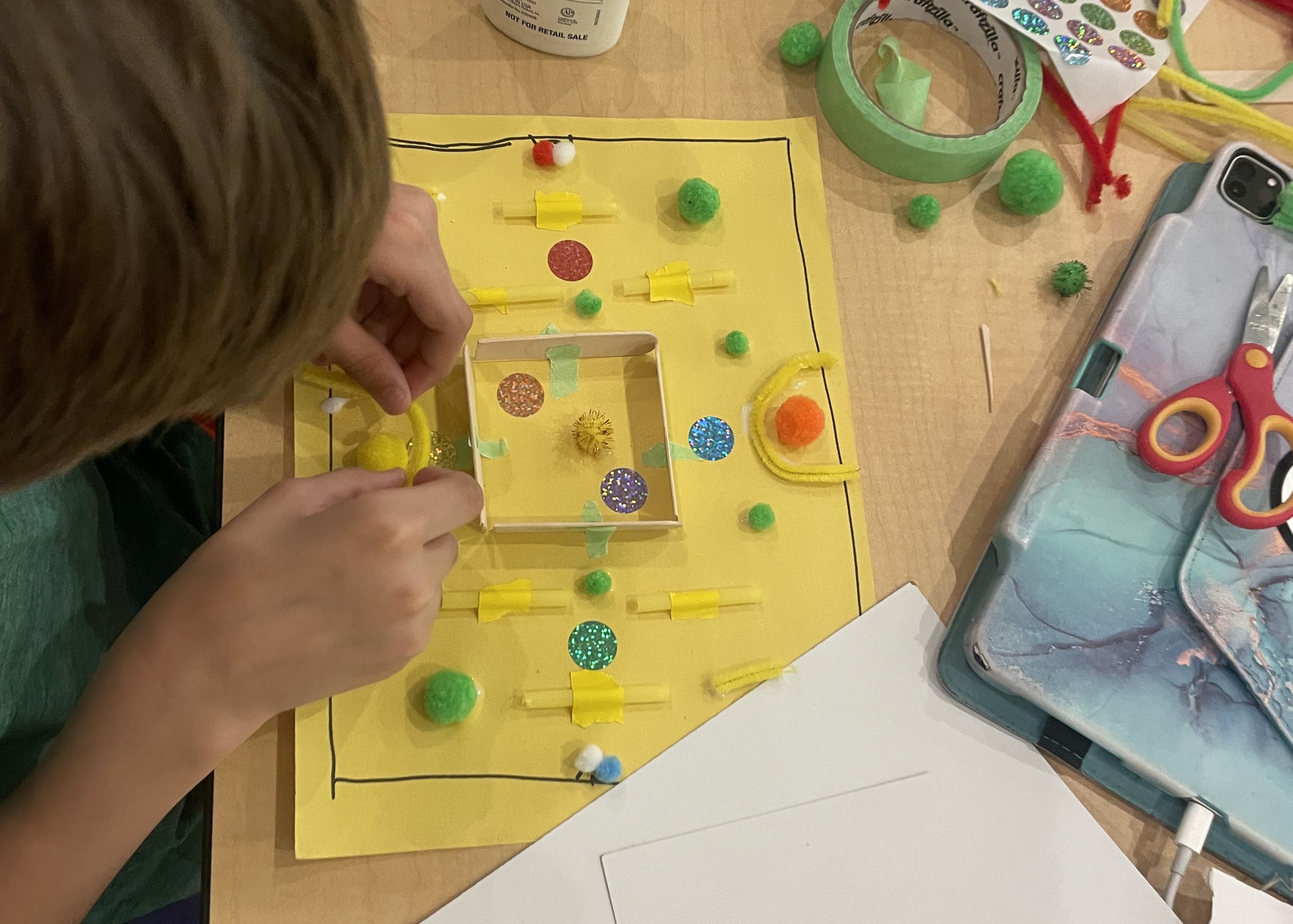
Low-tech prototyping (aka “Bags of Stuff”) uses low-fidelity, open-ended art supplies and asks all design partners in a group to work together to build a prototype for a possible future technology.
When and why to use this technique
Low-tech prototyping is a good technique to use when brainstorming early on in a design process. The nature of open-ended materials used in low-tech prototyping means that they encourage many creative ideas. Having something openly creative to work on can help both adults and children come together in a co-design process.
Supplies and Preparation
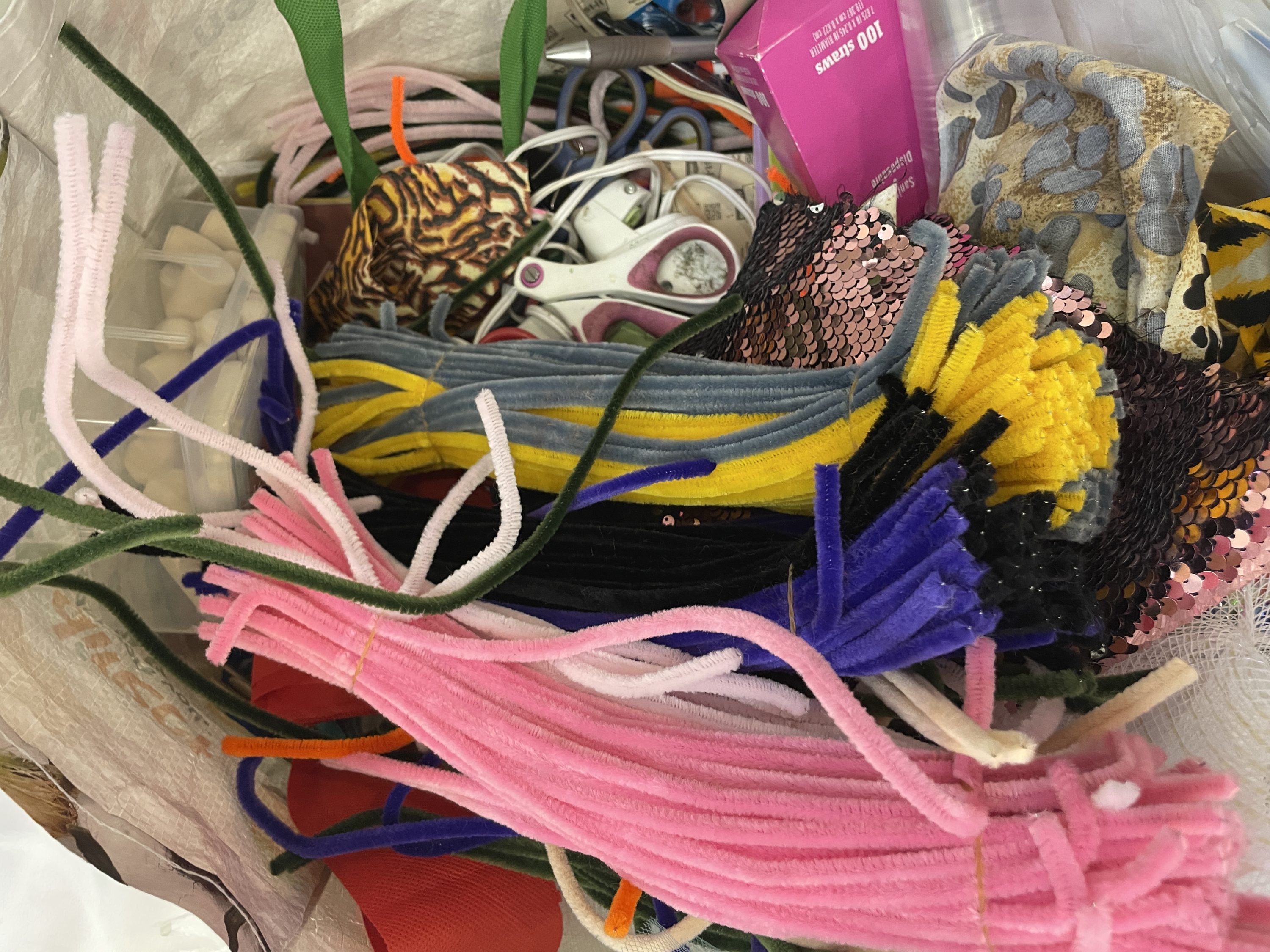
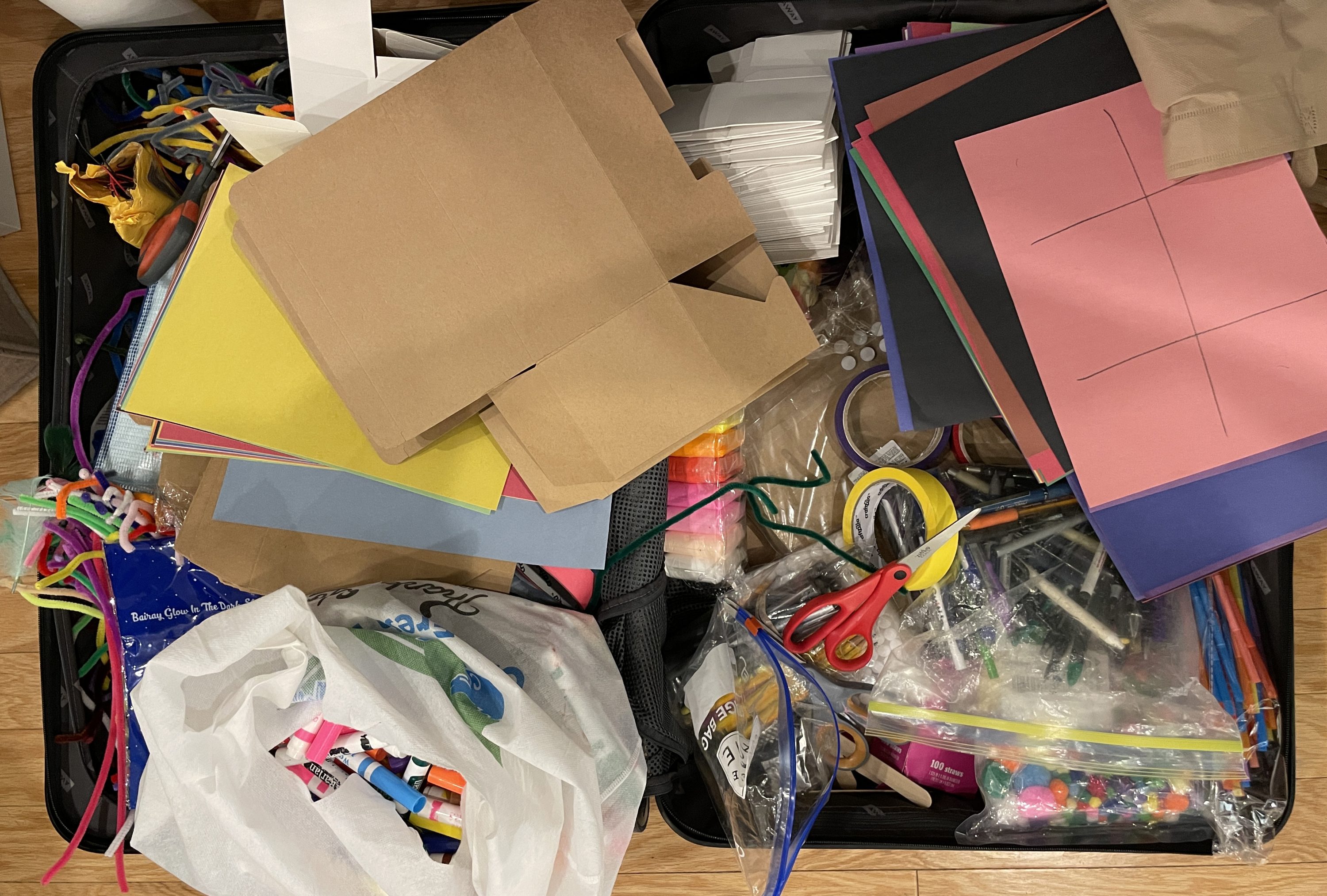
- Supplies: Open-ended art supplies such as foam shapes, yarn, toothpicks, tubes, clay, cotton, cardboard pieces, glue, tape, scissors, pipe cleaners, pom poms, and so on. Include 2-dimensional and 3-dimensional items. A variety of items should go into one bag per small group.
- Preparation: Check the bags to be sure that each is stocked with a variety of art supplies.
How to use this technique
- Once in small groups, each small group uses the materials in the bag to come up with a low-tech prototype in response to the design prompt of the day. While sometimes groups may start to work on different ideas within the group, try to encourage the group to come up with one idea from each small group.
- While the groups are building, pay close attention to discussions that are had. Adult design partners may wish to take down notes of conversations, especially those that are not reflected in the final design for the group. These ideas may be important later on but may not get shared out during Big Ideas at the end of the design session.
- Low-tech prototyping can be adapted in a number of ways for online use. Some teams choose to send low-tech art supplies to co-designers at home so that they can create prototypes at home. Co-designers are then asked to take and send in photos of those prototypes. Alternatively, you may choose to have each member find an object in their house and bring it to the session; some characteristic of this object will then need to be included in the prototyping.
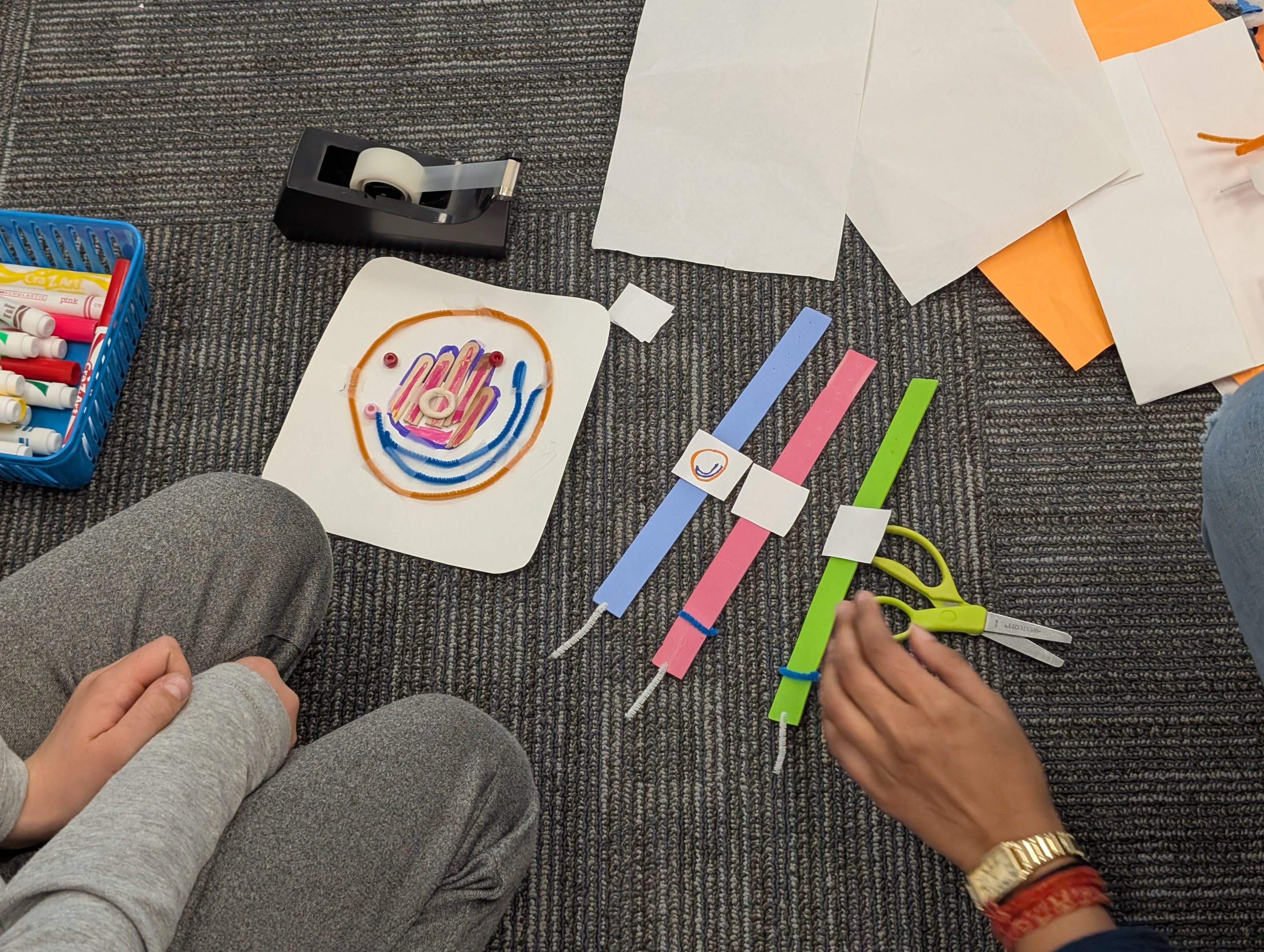
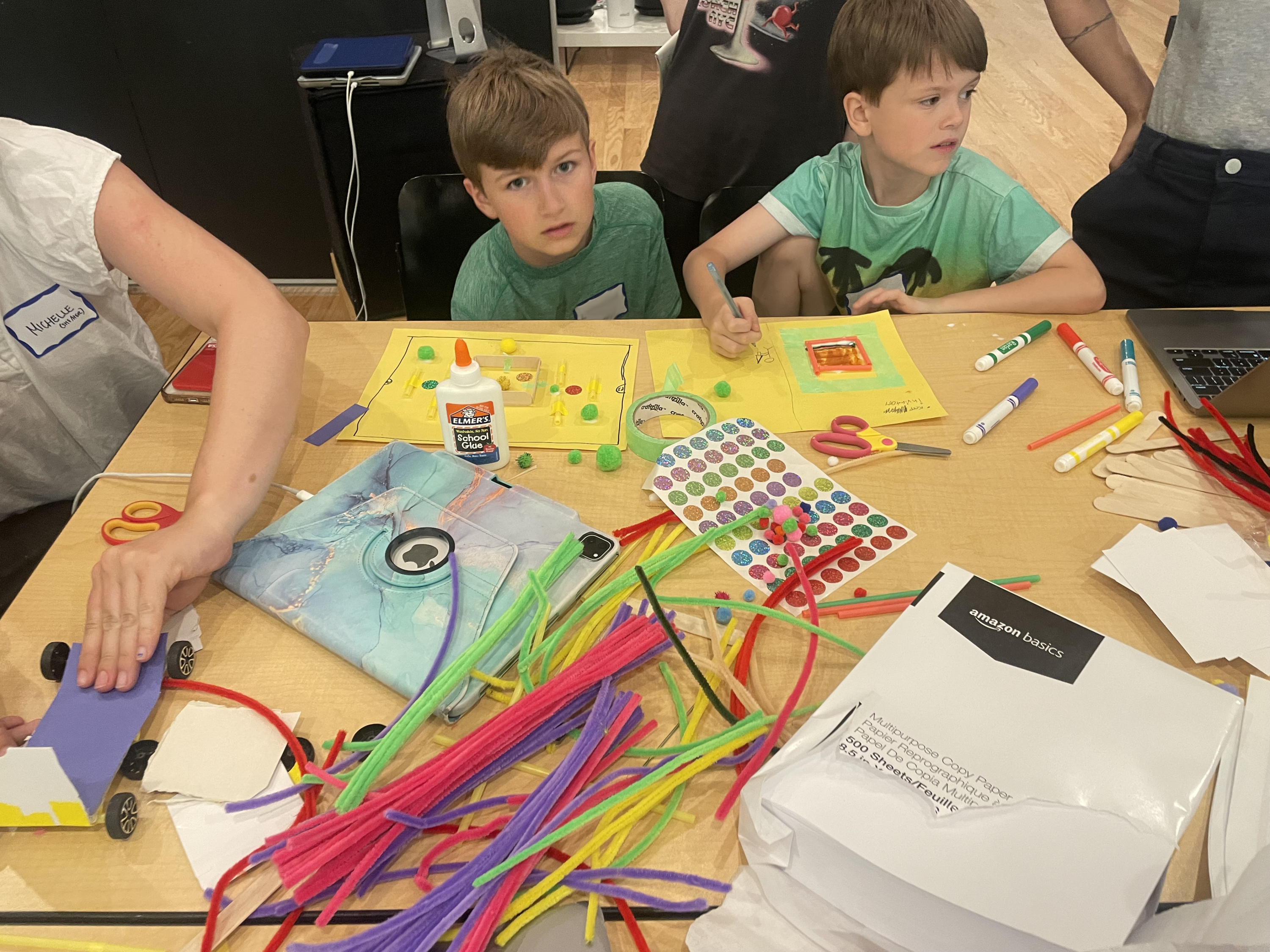
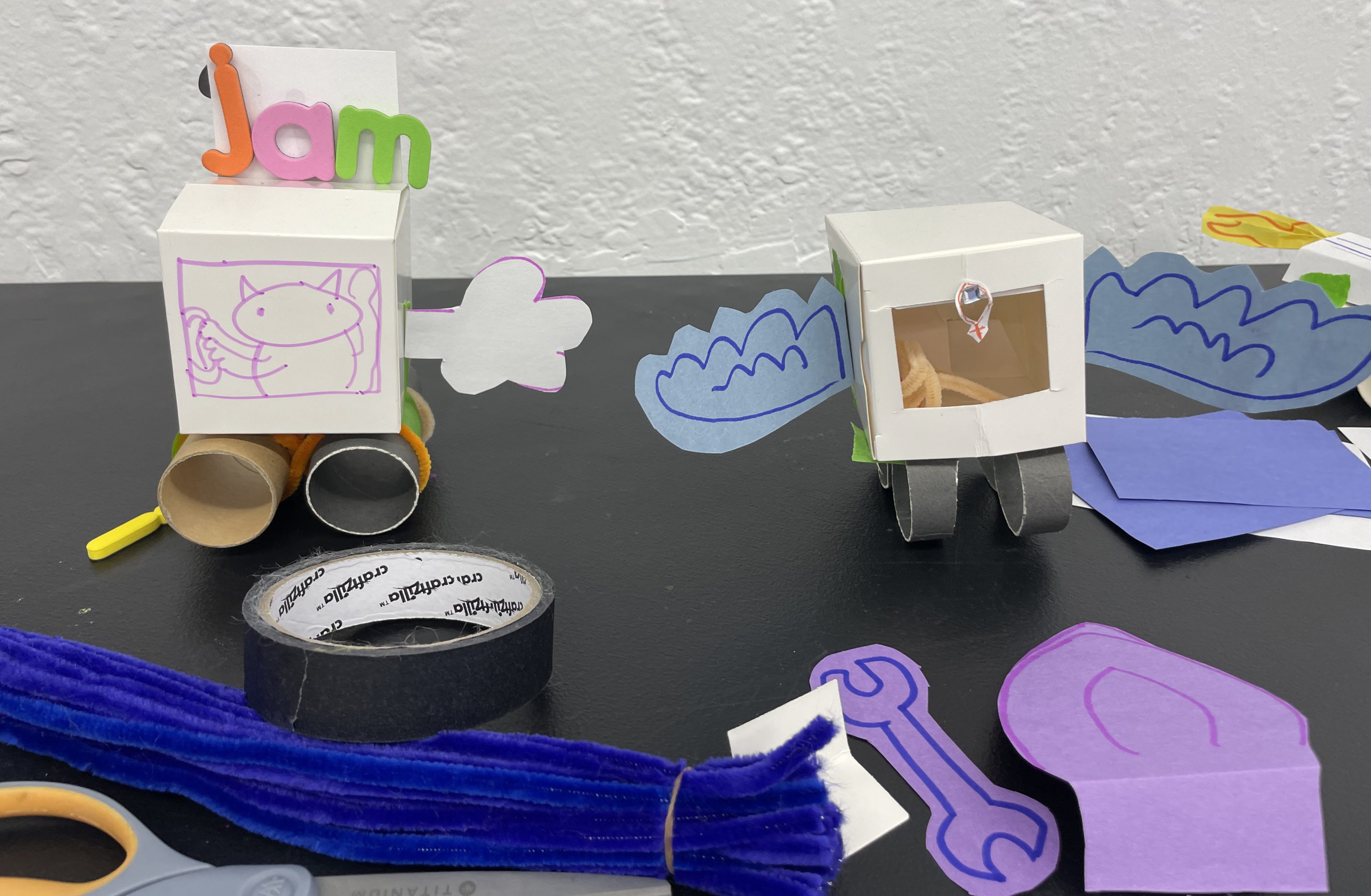
See this technique in action

References
Druin, A. (1999). Cooperative Inquiry: Developing new technologies for children with children. CHI 99: Proceedings of the SIGCHI Conference on Human Factors in Computing Systems. 592-599.
Fails, J.A., Guha, M.L., & Druin, A. (2013). Methods and Techniques for Involving Children in the Design of New Technology for Children. Foundations and Trends in Human-Computer Interaction 6(2).
Roussou, M., Kavalieratou, E., & Doulgeridis, M. (2007). Children designers in the museum: Applying participatory design for the development of an art education program. IDC ‘07: Proceedings of the 6th International Conference on Interaction Design and Children. 77- 80.
Sluis-Theischeffer, W., Bekker, T., & Eggen, B. (2007). Comparing early design methods for children. IDC ‘07: Proceedings of the 6th International Conference on Interaction Design and Children. 17 – 24.
Walsh, G., Foss, E., Yip, J., and Druin, A. (2013). FACIT PD: A framework for analysis and creation of intergenerational techniques for participatory design. In Proceedings of CHI 2013, 2893 – 2901.
Yip, J., Clegg, T., Bonsignore, E., Gelderblom, H., Rhodes, E., & Druin, A. (2013). Brownies or bags-of-stuff? Domain expertise in cooperative inquiry with children. In Proceedings of the 12th International conference on interaction design and children, 201-210.