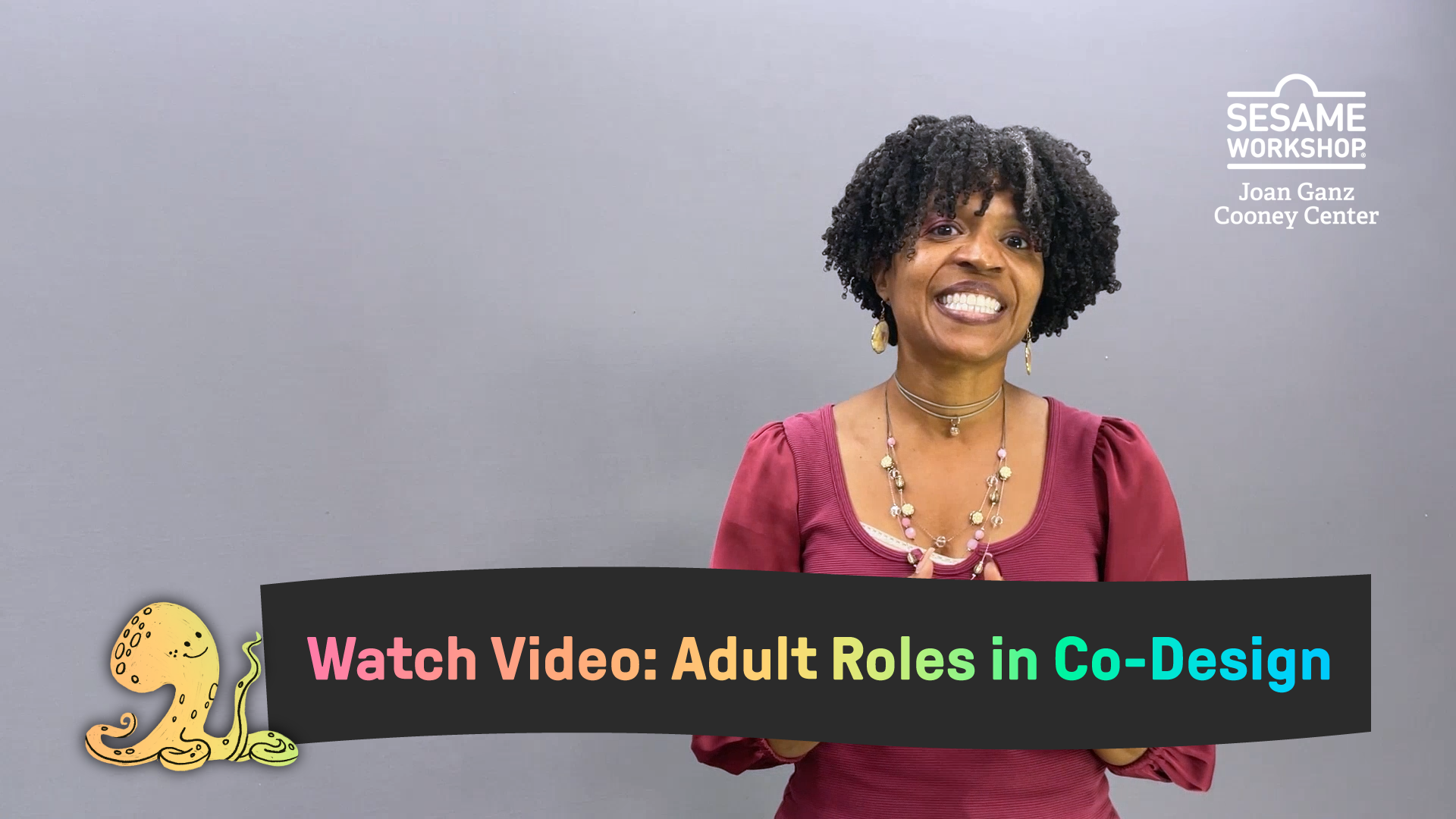

At the core of co-design is the idea that all co-designers, child and adult alike, have equal voice in the design process. This can sometimes be a difficult role for adults to step into. Adults may be more comfortable in more traditional adult roles when interacting with children, such as that of a teacher or a researcher. Additionally complicating this role confusion is the fact that adults do need to play other roles in the sessions other than co-designer.
An adult co-designer is not an interviewer, researcher, or a teacher. As an adult co-designer, you need to listen and ask questions, but also challenge, push back, and bring in your own opinions and design ideas while being mindful to give enough space to child co-designers. It is often more comfortable for adults to take on familiar roles: to be the “researcher” who asks questions, takes notes, and remains neutral, or to be the “teacher” who has authority and the final say. It is very delicate to be the co-designer.
- As a “researcher” we want to learn more and not influence.
- As a “teacher” we want to make sure everyone “stays on task” and establish our voice to be able to better manage.
- As a co-designer, we want to engage in discussions, bring in different points of views, negotiate, elaborate, and together come to some decisions.
Below are some examples of a conversation between an adult and a child in which the adult takes the three different roles above: researcher, teacher, and co-designer. All three are about the same topic, a VR building game called Cubism, which is relevant to the day’s design task. Notice the subtle differences in each role, which are appropriate if that’s how you intend to interact with the kids. If you are intending to work as a co-designer, there is a significant qualitative difference in the roles, including elaborating on children’s ideas and adding in your own reflections.
- Adult as teacher:
Child: Cubism is boring (teacher makes a note perhaps for future planning)
Adult: I hear you but this is the assignment. Let’s play it for 10 minutes and then we can move on to the next game. - Adult as researcher:
Child: Cubism is boring (researcher makes a note)
Adult: What’s boring about it? Tell me more.
Child: It’s just building things and snapping things together
Adult: Anything else you’d like to add?
Child: … - Adult as co-designer:
Child: Cubism is boring(Adult writes “boring” and posts it, signaling that the adult is hearing the child and the child’s opinion is being counted.)
Adult: Hmm… what’s boring about it? I actually loved it!
Child: It’s just building things and snapping things together.
Adult: Yeah, I guess I like it because it reminds me of Tetris, and I used to love playing that game. It also makes me feel calm and focused.
Child: Yeah – it is calm, but I’d rather be energetic!
Child: Tetris has a timer – Time = Adrenaline. This is just building things.
Adult: Great point! I never thought of it that way. There is something about how we as players want to feel and also a sense of nostalgia!
Child: YEAH! This other game reminds me of my childhood, and I love it!
In addition to co-designer, adults must play other roles before, during, and after co-design sessions.
- Organizer: Typically, adults will organize design sessions. This includes many functions, such as ensuring that you have space, snacks, and materials for the sessions. You also will need someone who communicates with parents of child co-designers about things like absences or late arrivals, or if a session must be canceled or postponed.
- Session leader: Often, the role of session leader is an adult. Please note that for older children and children who have been co-designing for a while, this role can go to a child. Session leader introduces the design prompts, is overall in charge of keeping the session on track for time, and leads Big Ideas at the end of the session. It is often helpful if this person also leads session planning and debriefing.
- Ensurer of safety: While you are equals in co-design, children remain children and adults remain adults. Adults in the room need to ensure the safety of children —such as being sure you are in a safe environment, to offering a safe place for children if they have had a tough day or need emotional support. Walking the line of switching back and forth between co-design equals and adults when needed can be tricky, but will eventually become second nature.
- Planner: Typically, adults will sketch out plans for upcoming sessions. More information on doing this can be found in the sections on pre-session work and post-session work.