
Technique Summary
Mixing Ideas is a brainstorming and iterating technique created for working with young children in which many ideas are brought together using a structured system to produce one final idea.
When and why to use this technique
Mixing Ideas is best used when working with young children (ages 3-6) who may need support in combining their ideas with others’ ideas
Supplies and Preparation
- Supplies: Large paper, writing/drawing tools (i.e., markers, crayons, pens, etc.), scissors, tape.
How to use this technique
- Begin by introducing the design prompt. This might be something like “let’s create a new game to play outside” or “let’s create a way to hear stories on our iPads.”
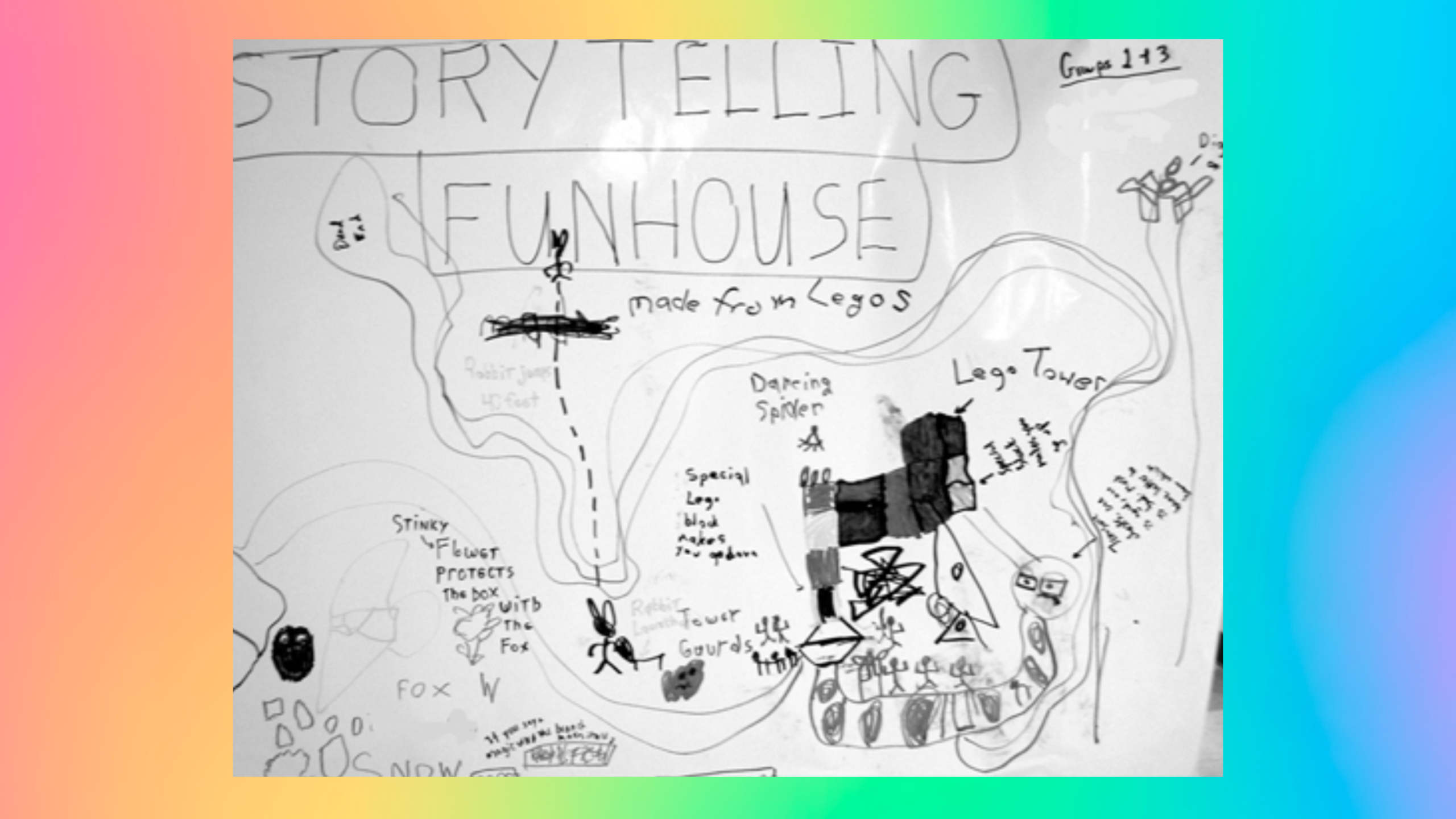
- Each child starts by creating their own idea. This is one of the few times in co-design where you may start individually; however, if possible it is good to have an adult work with each child or with a couple of children at a time. While the adult and child co-design together, the adult might find it helpful to annotate the drawing with words or to take notes on what the drawing represents.
- After initial ideas are created, it is best to wait until the next session to begin to “mix” the ideas. This time can allow young children to feel less emotionally attached to their original ideas, and thus more likely to combine them with others. In the interim, adult co-designers can review the individual designs to consider which might be the most appropriate to combine initially.
- In the next session, pairs or small groups of children work with adult co-designers to combine their ideas.
- When beginning to mix ideas together, using the analogy of baking cookies can be helpful if the children in the group have had experience with this. While the initial ingredients (i.e., flour, salt) may not taste good individually, when you combine them together you get a delicious cookie. You can also use the analogy of mixing colors together – when two colors are combined, they often make a third, unique color.
- Consider emphasizing that while some parts of co-designers’ ideas will be kept, others may not be integrated in the final product. This is difficult for some young children to understand; making it explicit can help them to see that many ideas are included in some way.
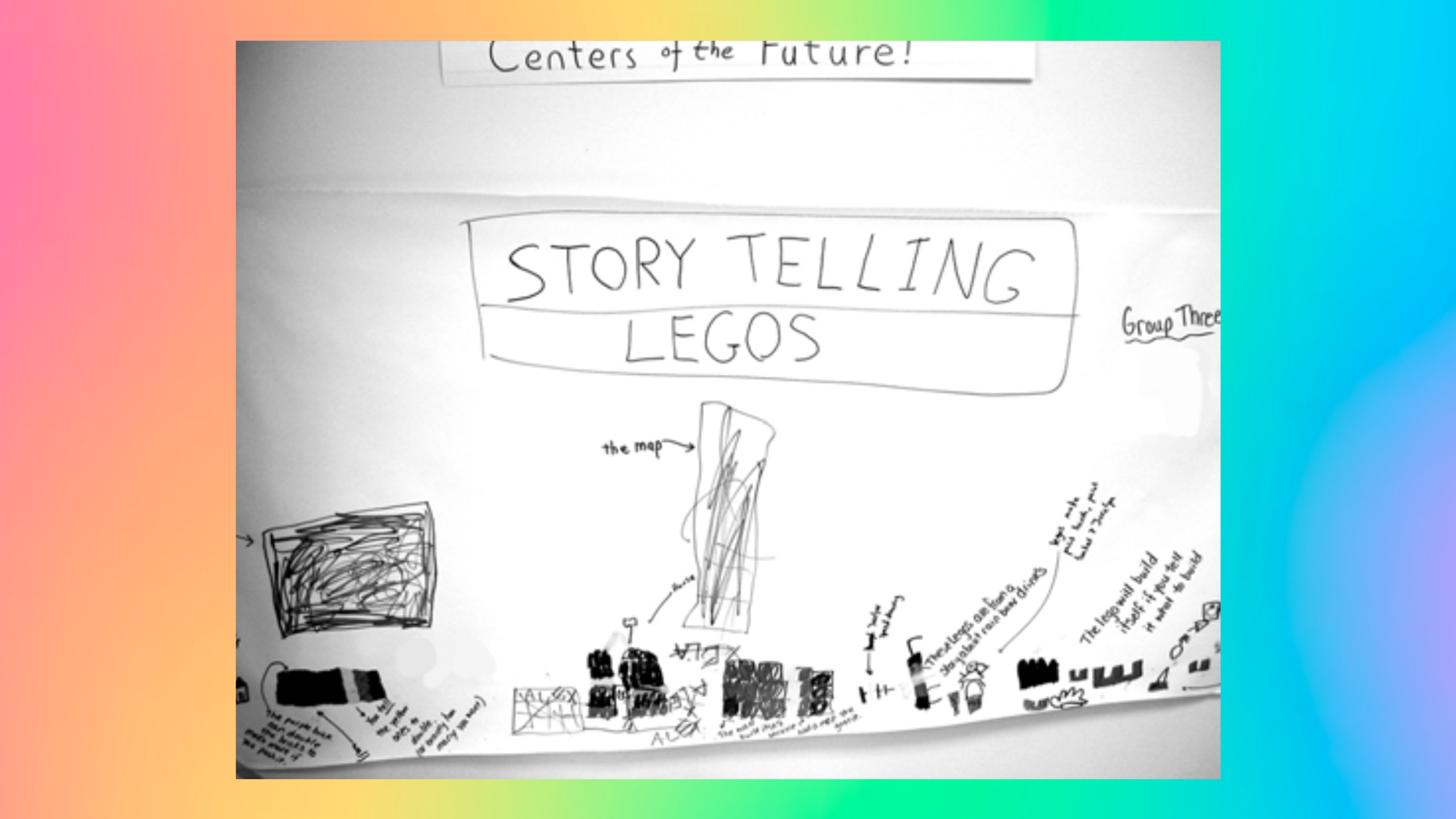
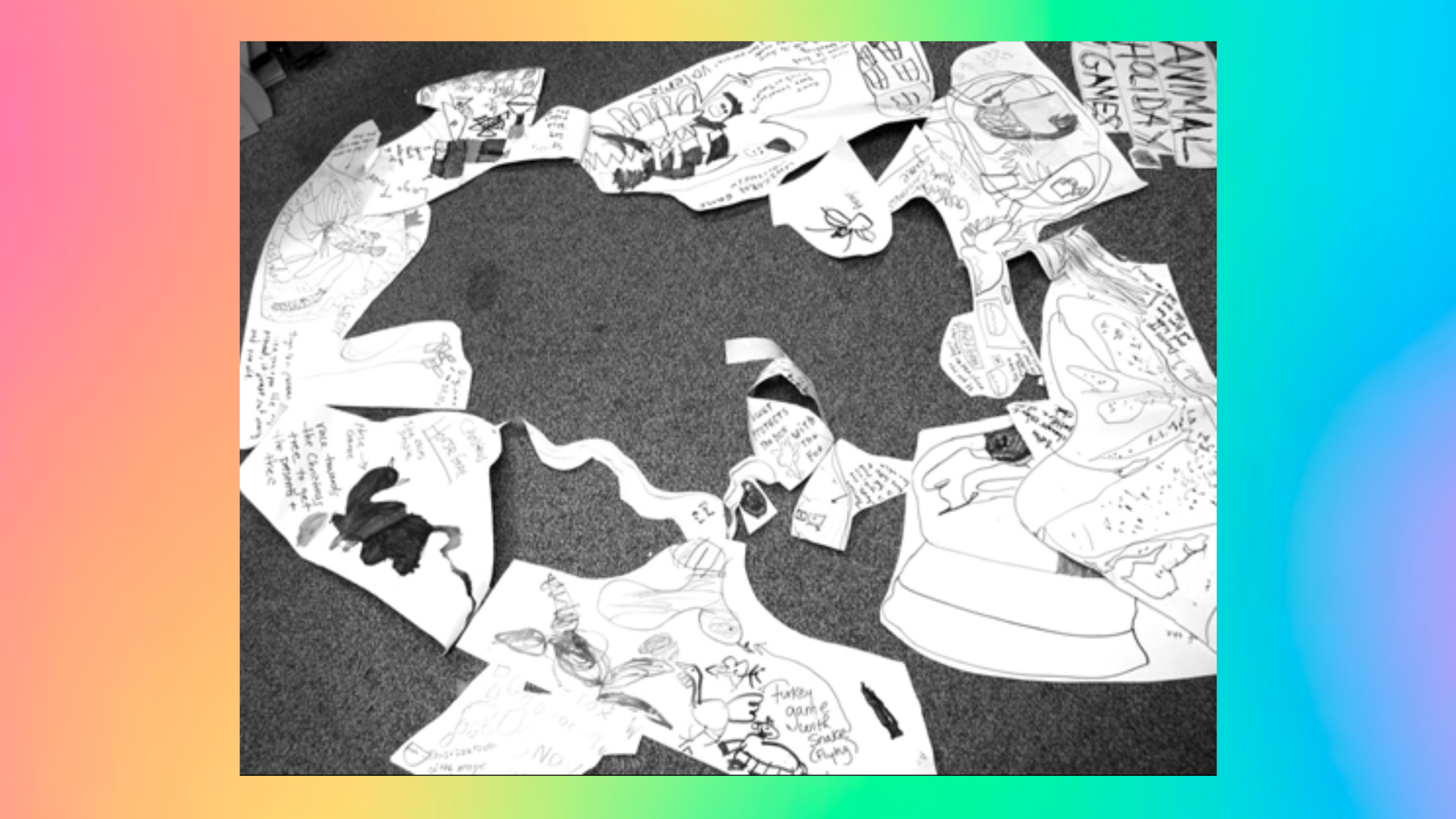
- Groups should be provided with the same materials as earlier, and encouraged to cut and remix their original drawings together to come up with new ideas.
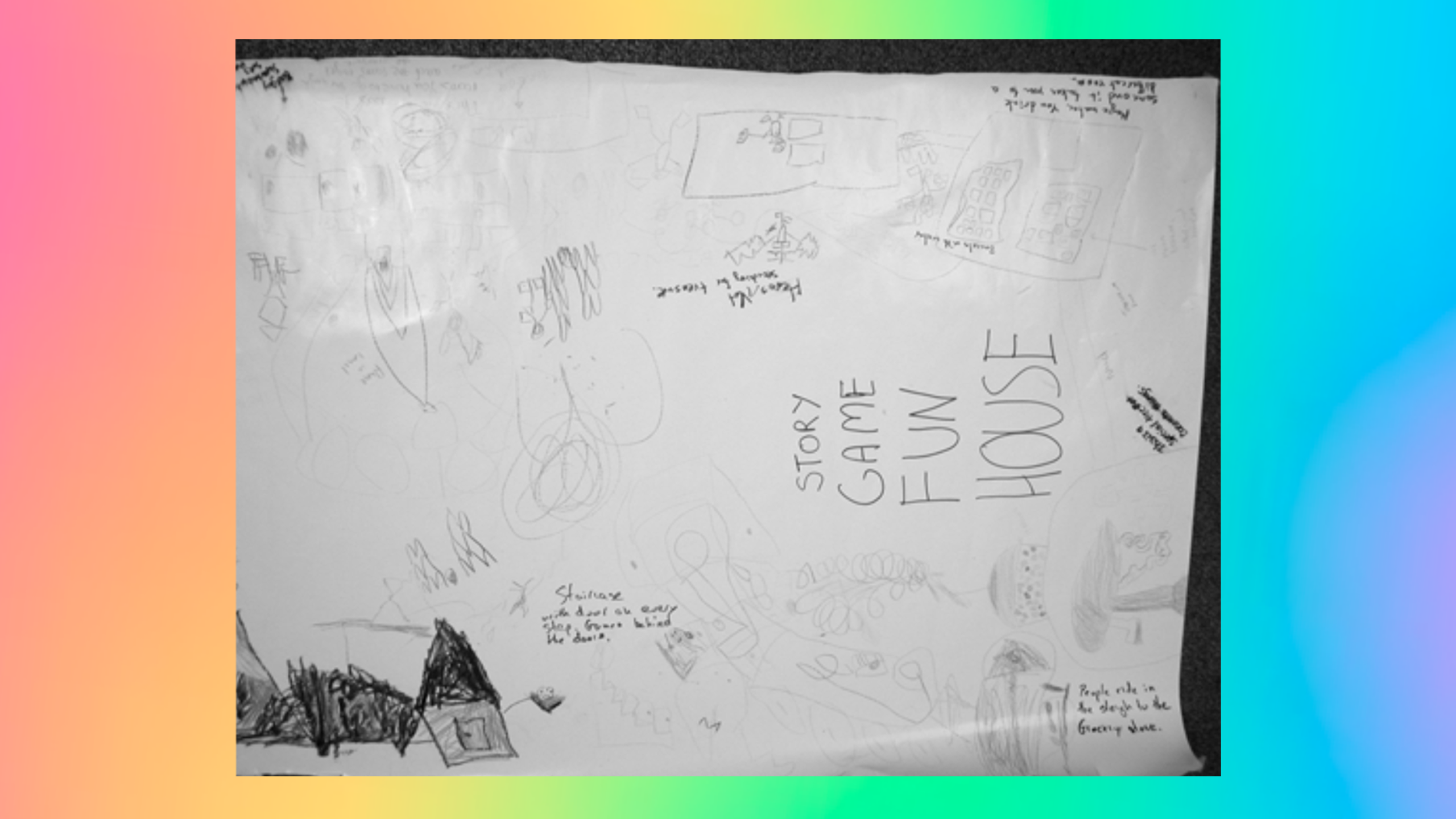
- In the next session, combine the small group ideas together similarly to how the individual ideas were combined. It is possible that this will result in combining all of the ideas together into one final group idea, or that there may be a few final ideas. This step should follow the earlier steps of allowing time to go by between sessions, and providing drawing, cutting and combining art supplies. Again, adult co-designers should meet between sessions to consider how the ideas could be combined and to enter the final session with directions that the final design might take, while still being open to new ideas that arise from the team.
See this technique in action
References
Fails, J.A., Guha, M.L., & Druin, A. (2013). Methods and Techniques for Involving Children in the Design of New Technology for Children. Foundations and Trends in Human-Computer Interaction 6(2).
Guha, M.L., Druin, A., Chipman, G., Fails, J.A., Simms, S. & Farber, A., (2004). Mixing Ideas: A new technique for working with young children as design partners. In Proceedings of the 2004 Conference on Interaction Design and Children: Building a Community, pp. 35 – 42.
Guha, M.L., Druin, A., Chipman, G., Fails, J.A., Simms, S. & Farber, A., (2005). Working with young children as technology design partners. Communications of the ACM, 48(1), pp. 39 – 42.