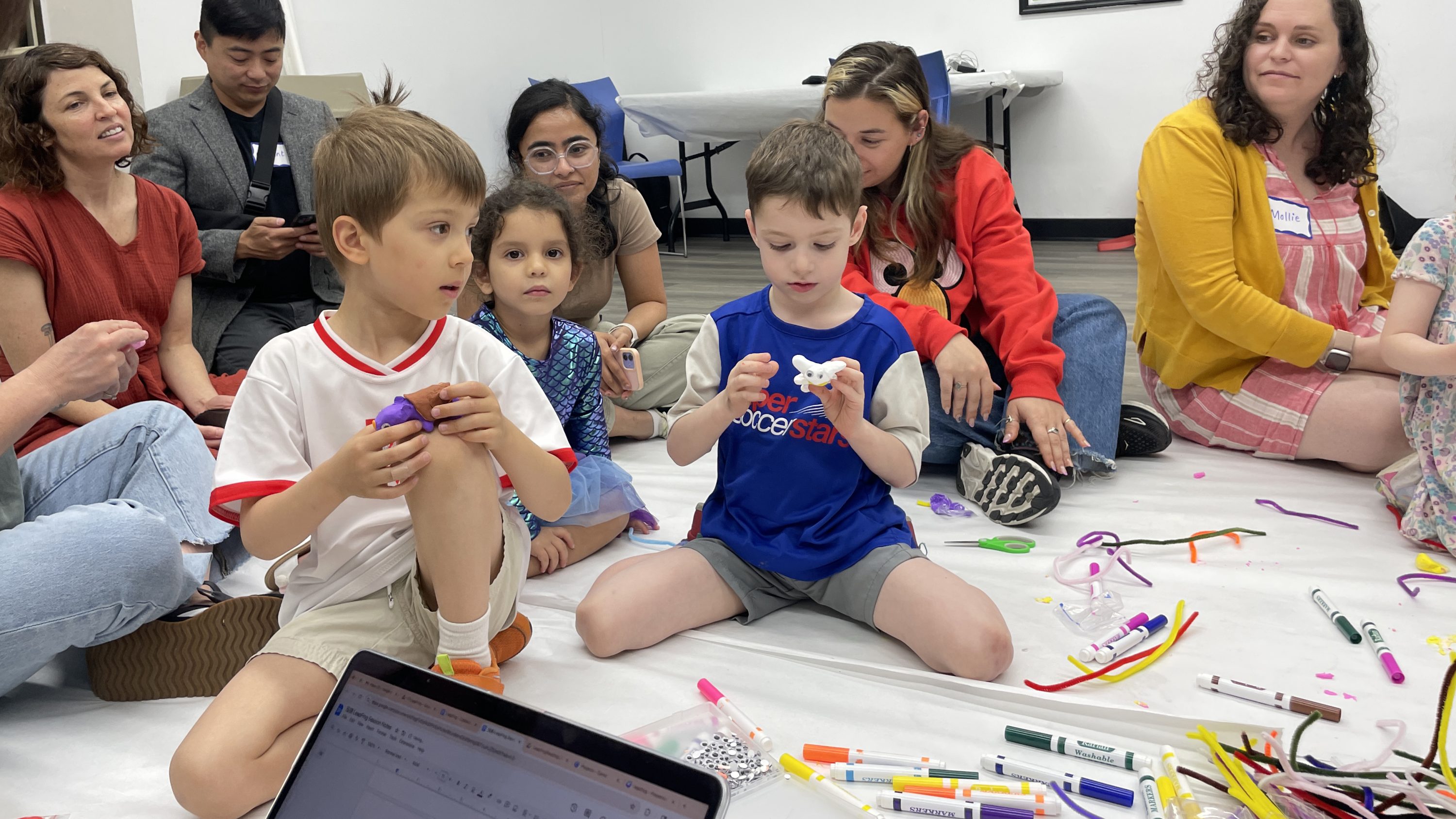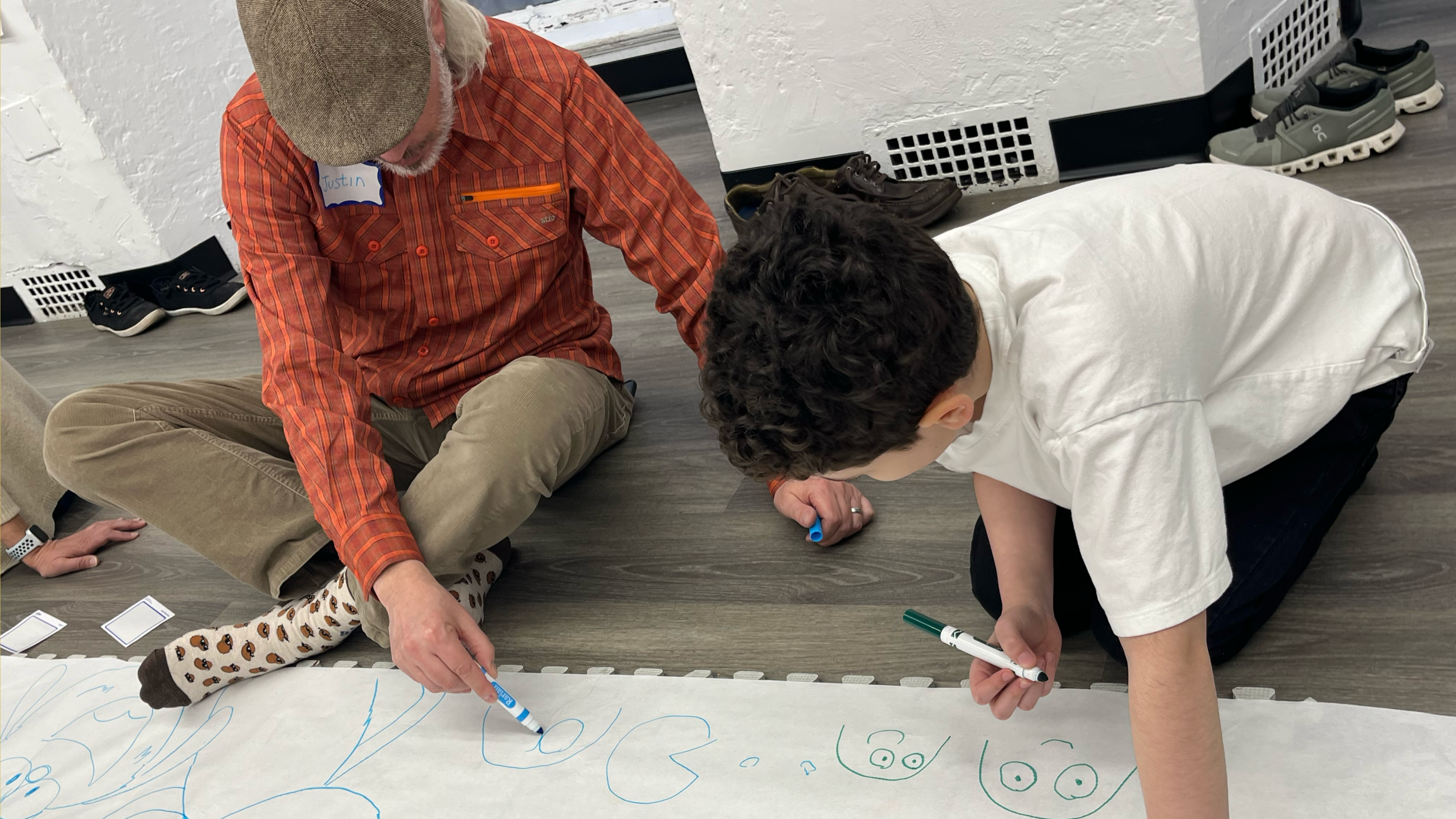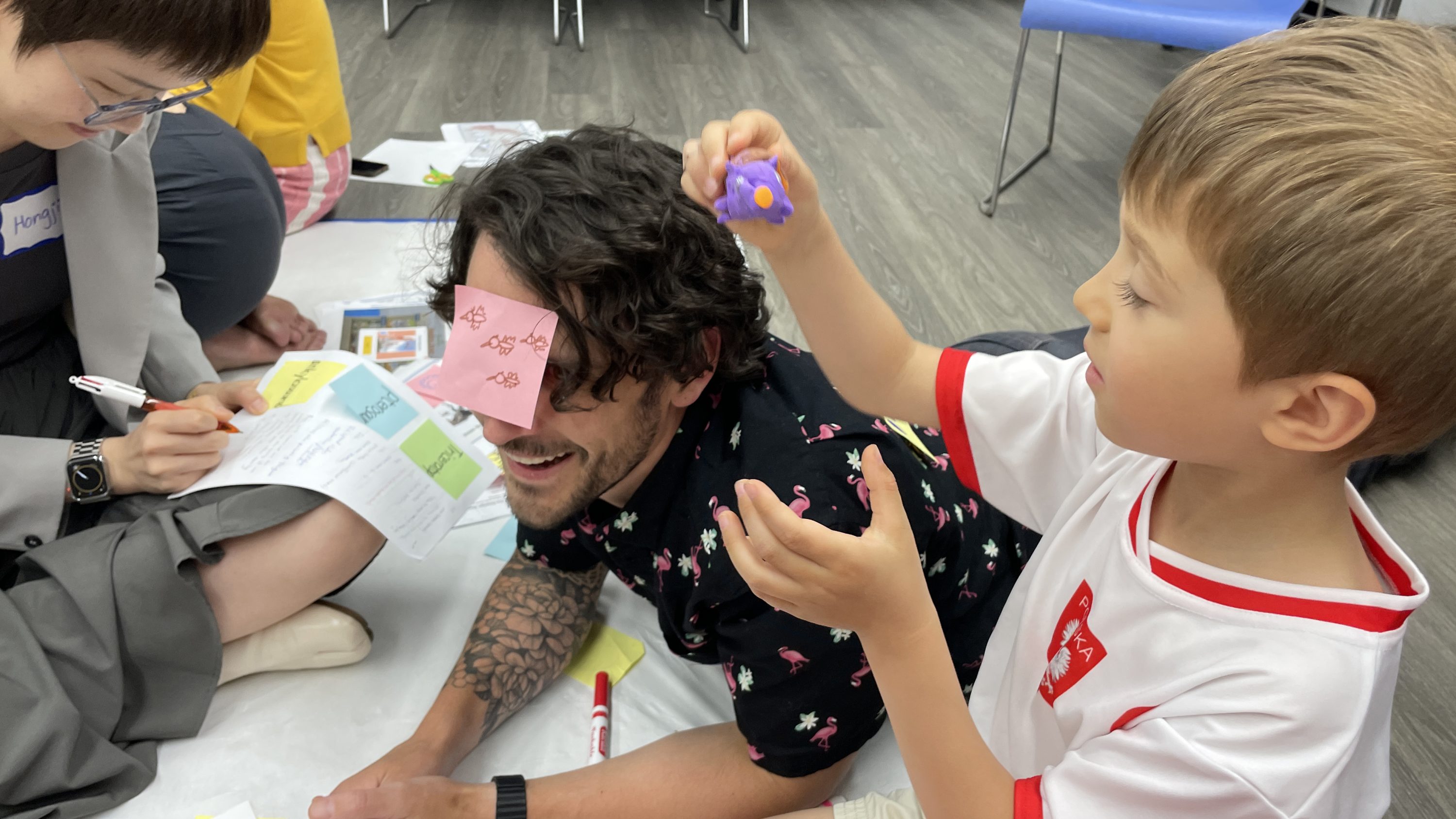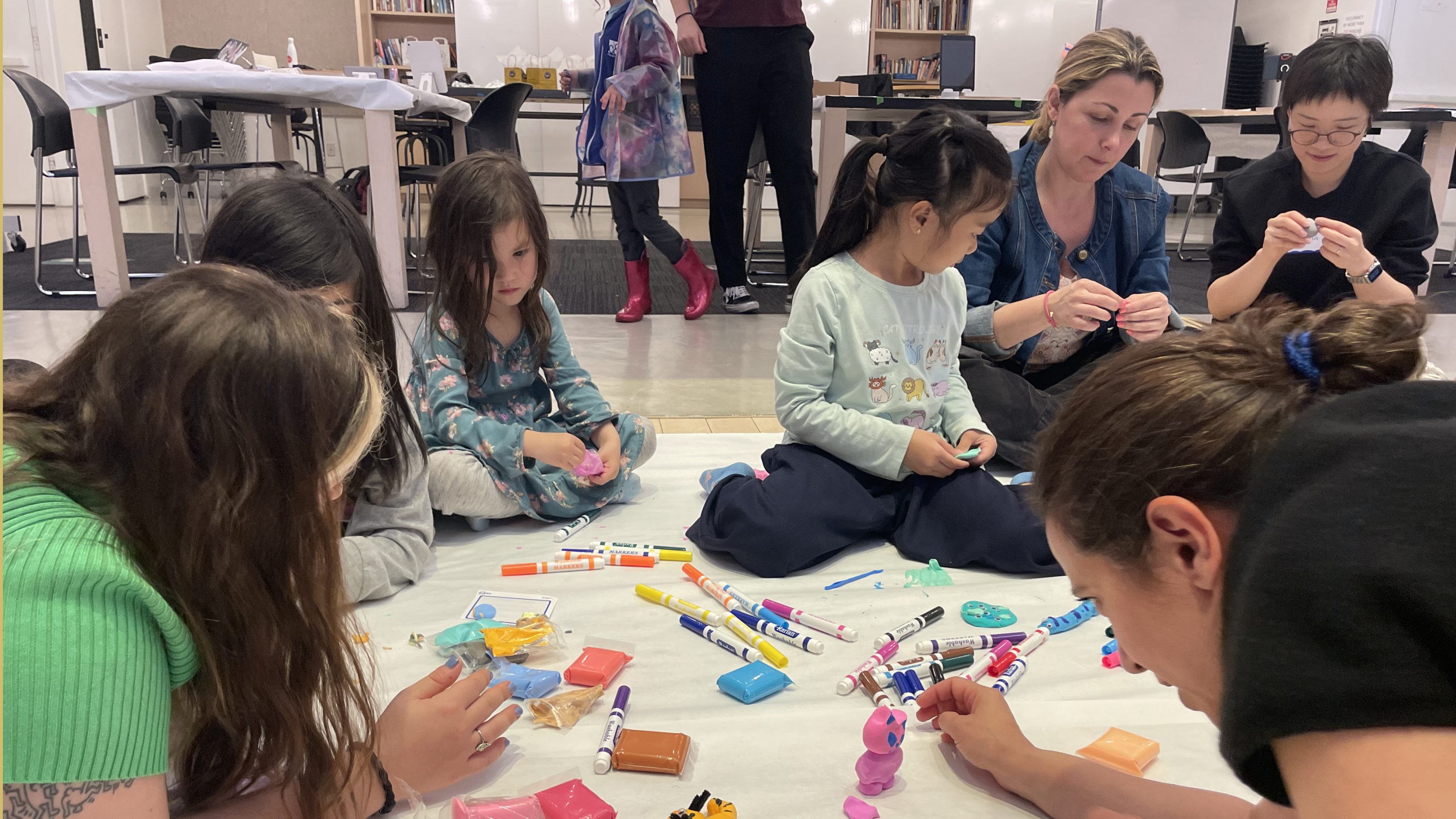
Adults and children should have equal voices in the co-design process. This is in contrast to many aspects of children’s lives, in which they do not have equal power to adults. The most effective way of breaking down power barriers is to do so by example and actions – simply stating this tenet will not generally be met with children believing it.
- Everyone should be on a first-name basis. For example, in a co-design session, Professor Dr. Jane Smith is Jane, graduate student Mr. Malcolm Yu is Malcom, and the child Sasha Jackson is Sasha.
- When introducing yourself, everyone, including adults, should say their age. Children are not used to adults telling their ages, and it is a quick way to show that you are willing to share information with your child co-designers.
- Everyone should sit on the same level. Whether you are on the floor or in chairs around a table, be sure everyone is at the same height.
- No raising hands to talk; allow conversation to flow as it would in an adults-only design team.
- Wear comfortable clothes. Adults should wear what the children will be wearing, often in after school programs this is jeans or other casual wear. This not only helps to equalize the power dynamic, but it is practical for sitting on the floor, possibly getting dirty when using art supplies, and so on.
- Try to meet somewhere without a pre-established power dynamic. If possible, this means not meeting at schools. Neutral locations such as libraries, community centers, and labs can work well.
- Share appropriate, informal chat with the whole team. At the beginning of a session, you may discuss your day. A child may share that they had a difficult test while an adult might share that they had a frustrating online meeting.